History of Salsa: From Cuban Music to New York and the World
Contents
This page is a reference translation of the Japanese original (日本語の原文). It has not been checked by a native speaker. Please confirm details with each organizer.
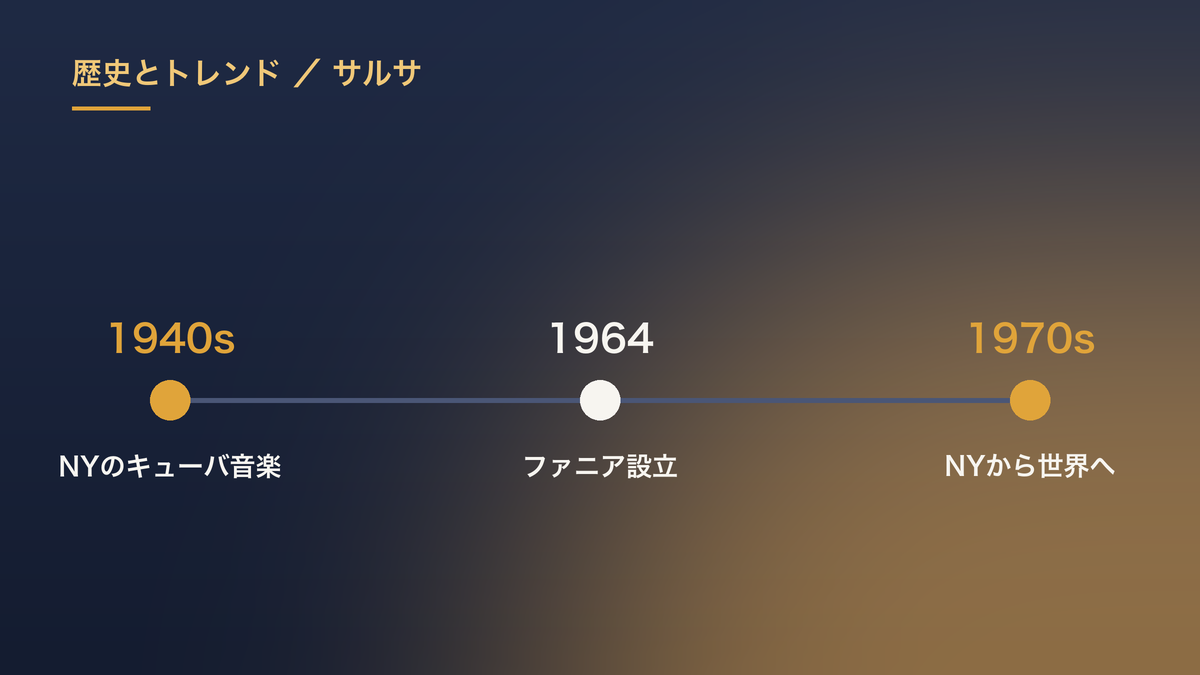
Salsa is a music and dance that is said to have grown from Cuban music in New York in the mid-20th century, mainly among immigrants from Puerto Rico and other places, and to have spread in the 1960s through Fania Records.
“Salsa” is the name of a dance, and also the name of a music genre. How did it reach its present form? If you remember a little of this story when you dance, the music may sound different to you.
The roots are in Cuban music
Cuban music is the base of salsa. It is said that people who moved to New York brought the music of their own homelands, and that these sounds mixed and grew.
In New York in the 1940s and 1950s, Machito and others blended Cuban music with jazz and big band. This is sometimes explained as the groundwork for later salsa.
Growing up in New York
In the middle of the 20th century, more people moved to New York from Puerto Rico and other parts of the Caribbean. In the neighborhoods where New York’s Latino communities lived, this music is explained to have grown lively as an expression of their own identity.
Fania Records and the name “salsa”
In 1964, Johnny Pacheco and Jerry Masucci founded Fania Records. In 1968, Fania formed “Fania All-Stars,” a band of its own musicians. It is explained that through the 1970s Fania spread this New York music across Latin America.
One account says that Pacheco called this music “salsa” (Spanish for “sauce”). However, there are several theories about where the word “salsa” comes from.
Seen from the dance side
As the music spread, the dance also grew in each region. There are many ways to dance it, such as the Cuban style (Cuban / casino) and the New York and LA styles (On1 / On2). The differences are summarized in What Is Salsa?
Salsa keeps changing
Salsa has no single finished form. People in each place keep mixing it, and it keeps changing. When you dance in Sapporo, you join part of that flow.
Related articles
Sources
Note: the history here is an overview based on public information such as the sources above. Many details have several theories.