History of Kizomba: How Angola's "Party" Spread Around the World
Contents
This page is a reference translation of the Japanese original (日本語の原文). It has not been checked by a native speaker. Please confirm details with each organizer.
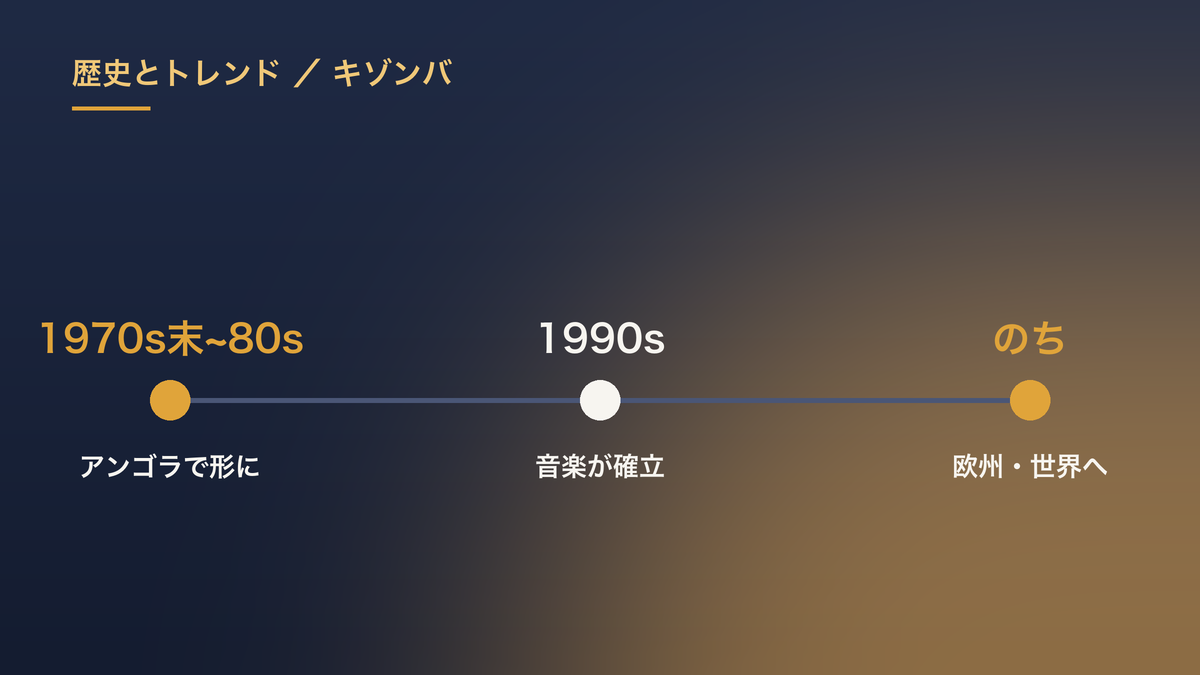
Kizomba is a music and dance that is said to have taken shape in Angola from the late 1970s to the 1980s. Its name is said to come from the word for “party” in the Kimbundu language.
Kizomba, danced in a slow, walking way, was born in Angola. Let’s look at what the name means and how it spread.
“Kizomba” means “party”
The word “kizomba” is said to come from Kimbundu, one of the languages of Angola, and to mean “party” or “celebration.” One account says it first referred to a gathering where people danced, ate and talked together.
Taking shape from the late 1970s to the 1980s
Kizomba as we know it is said to have taken shape in Angola from the late 1970s to the 1980s. Its base was semba, a music and dance of Angola. It is explained that the influence of zouk (a music born on the French-ruled islands of the Caribbean) gave it a slow, soft mood.
Becoming established as music
Eduardo Paim is sometimes called the “father” of kizomba. His band and the 1992 album “Luanda, Minha Banda” are regarded as important milestones.
To Europe, and then the world
After that, kizomba spread through African and European communities, dance schools, videos and international festivals. It is said that new styles, such as UrbanKiz, were born as it spread.
When you dance
Kizomba is a dance where you stand close to your partner. It is important to dance while checking that your partner is comfortable (How to Ask for a Dance and How to Say No). The atmosphere and the basics are summarized in What Is Kizomba?
Related articles
Sources
Note: the history here is an overview based on public information such as the sources above. Many details have several theories.