Son, Mambo, Cha-cha-chá and Rumba: The Cuban Music That Came Before Salsa
Contents
This page is a reference translation of the Japanese original (日本語の原文). It has not been checked by a native speaker. Please confirm details with each organizer.
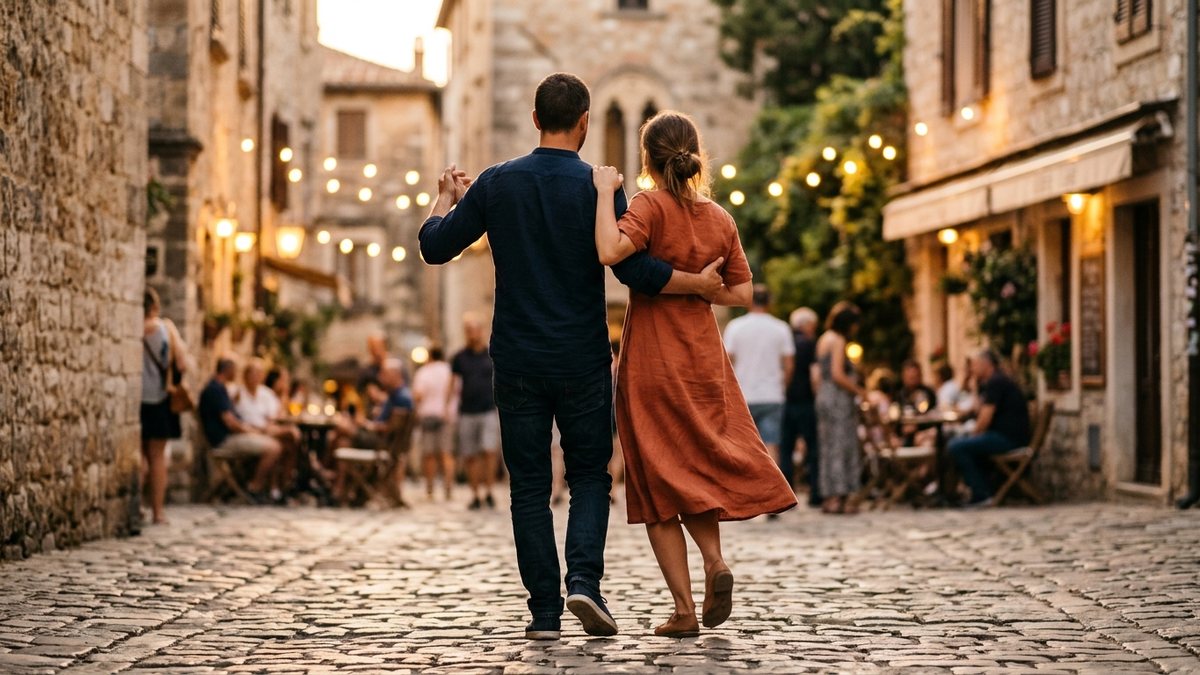
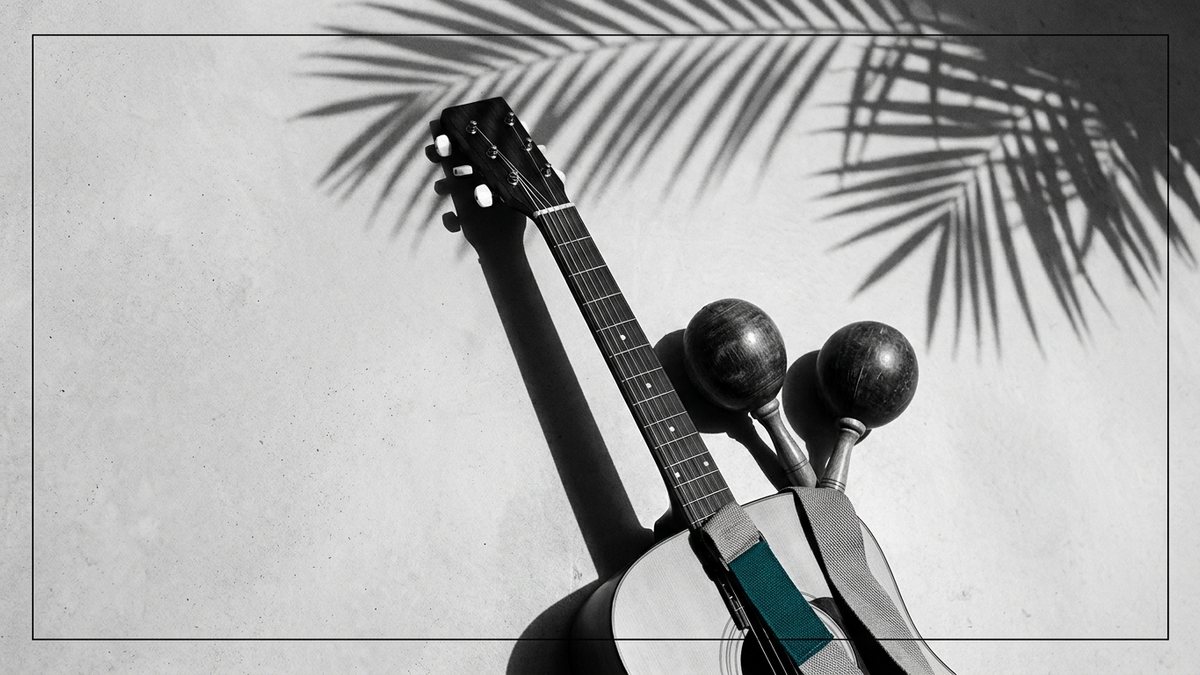
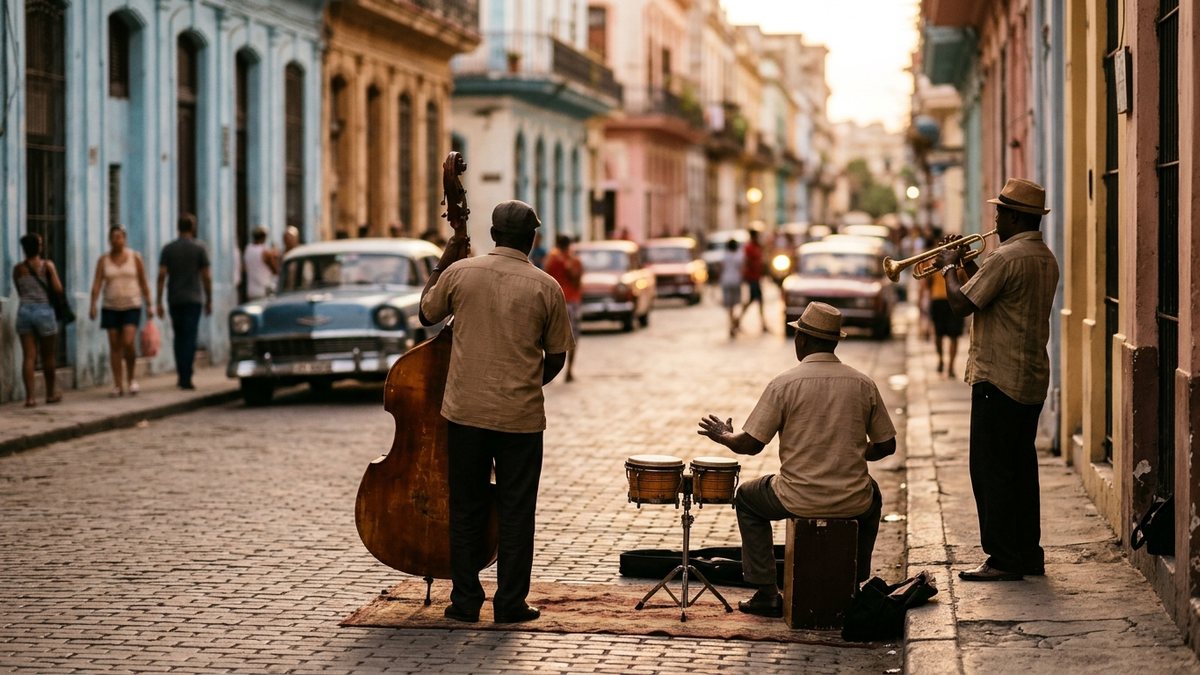
Images on this site are AI-generated illustrations, not photographs of real people, places or events.
Spotted something unnatural or wrong? Please tell us through the correction form (the form is in Japanese, but you can write in English).
The short answer: son, mambo, cha-cha-chá and rumba are all names of music (and dance) that grew up in Cuba, and they existed before salsa. English-language Wikipedia writes that most salsa songs are based mainly on son montuno and son cubano, and it also lists mambo, cha-cha-chá and rumba as styles that salsa took in or was influenced by. But the four are different things, and rumba in particular means different things in the “Rumba in Cuba” that UNESCO inscribed in 2016 and in the rumba of ballroom (competitive) dancing. This article does not repeat the history of salsa. It narrows to “a starting point for telling apart the music that came before salsa” and sorts out what could be confirmed in sources. There are several theories about origins and dates, so I say whose explanation each one is.
- Son: music of song and string instruments (the tres) and others, which many accounts say grew up in eastern Cuba. Some sources say its form was settled in Havana
- Mambo: many accounts say it was born from the danzón in Havana in the late 1930s. Pérez Prado spread it with a big band
- Cha-cha-chá: said to have been created by Enrique Jorrín in Cuba in the early 1950s. It is also the name of a dance
- Rumba: percussion, song and dance that grew up in poor districts of Havana and Matanzas. Inscribed as UNESCO intangible cultural heritage in 2016
About this article
I live in Sapporo and am around 50 years old. In 2019 I discovered salsa and bachata, and I still dance today. I am not good at dancing, and I am not a teacher or an organizer. I am not an expert in musicology either. I do not write a personal story about son, mambo, cha-cha-chá or rumba. This article writes only what could be confirmed in public sources, and shows the sources. The parts marked “my summary” and “my suggestion” are this site’s own thinking, and they are neither a source’s explanation nor anyone’s personal story. Where I could not confirm something, I say so. The date I checked was November 7, 2026.
The Four in a Word Each
| Name | A word from the sources |
|---|---|
| Son | Cuban music and dance. Many sources explain that it was born in the east in the late 19th century, but some say its form was settled in Havana |
| Mambo | Cuban music born from the danzón (the Japanese edition of Wikipedia also writes of an account in which jazz was added to rumba). The 1938 piece “Mambo” by Orestes López is said to be connected |
| Cha-cha-chá | Cuban music born from the danzón-mambo. The sound of the dancers’ feet is explained as the origin of the name |
| Rumba | A combination of percussion, song and dance that grew up on the edges of cities such as Havana and Matanzas |
Dates and explanations differ in places depending on the source. Below I go through them one by one.
Son
How It Began (There Are Several Theories)
- The account that it was born in the east: English-language Wikipedia describes son as “music and dance born in the highlands of eastern Cuba,” and explains that many musicologists think the oldest form was in the rural areas of Oriente Province (especially the Sierra Maestra) (the infobox gives the period as “the mid-19th century,” which is written differently from “the late 19th century” in the main text). A teaching unit for teachers from Yale University in the United States (Kathryn Gray, 1997) writes that the name son comes from “sonido” (sound) and is thought to have been born in the late 19th century around Baracoa and Guantánamo in Oriente Province
- The account that its form was settled in Havana: The abstract of the paper “From Contradanza to Son” by Peter Manuel of the City University of New York (Latin American Music Review, 2009) writes that the account in which son was born in the rural east and spread to Havana is often told, but that Cuban musicologists have shown that son took its decisive form in Havana from around 1910 to 1920 onward. Manuel argues that precursors of son’s features can be seen in the Havana contradanza of the 1850s and 1860s. The glossary site “Imidas” (イミダス) also writes that the home of son is said to be the east, but that the typical lineup of guitar, tres, bass, bongos, claves, maracas, güiro and trumpet came about in the late 1920s in the capital, Havana (its opening also says “born in Havana in the 1920s,” so there is a range in how it is written)
- Spread to Havana: English-language Wikipedia writes that it reached Havana around 1909 and that the first recording was in 1917. The Yale materials tell the story that in 1909 soldiers sent to the east to put down the uprising of the Agrupación Independiente de Color brought it back to Havana. Please read the year as a range, “around 1909”
- A legend: English-language Wikipedia writes that the story of the “Son de Ma Teodora,” said to date from the 16th century, is generally regarded as apocryphal
Features of the Music
According to English-language Wikipedia, son is music that combines elements of European (Spanish) origin (the way of singing, poetic forms, the tres, a string instrument that came out of the Spanish guitar) with elements of African origin (the clave rhythm, call and response, percussion such as bongos). It explains that the tres plays a repeating figure (an ostinato) called the “guajeo.” The same article also writes that there are regional names such as “son montuno” and “son oriental.” On the lineup, it writes that early groups had 3 to 5 players, that a six-piece lineup became the mainstream in the 1920s, that trumpet was added in the 1930s, and that the conjunto lineup using conga and piano became the standard in the 1940s.
The Yale materials explain the structure of son as a first half called the “largo” and a second half called the “montuno,” which continues with call and response, and they list the main instruments as claves, bongos, güiro, maracas, tres and marímbula (later replaced by the bass). English-language Wikipedia also writes that the clave rhythm was most likely taken from the Havana rumba around 1910 (this is Wikipedia’s description).
Link to Dance
English-language Wikipedia’s “Son cubano” calls son a “genre of music and dance,” but it says almost nothing about how it is danced. I did not find an explanation of step patterns in the sources I checked.
UNESCO also inscribed son on the Representative List in 2025 (20.COM) as “The practice of Cuban Son.” Sorting out UNESCO’s explanation, it is as follows. It is traditional music and dance combining song, instruments, rhythm and movement, performed in pairs or groups, with both improvisation and fixed patterns. The lyrics are taken from daily life and passed on orally, and the influences of African and European music come together. The dance is deeply tied to the music, and instruments such as the bass guide the dancers’ footwork. The singer leads the performance, and the tres (a string instrument) has an important role. The dance is done freely or with fixed choreography, and the man often guides the rhythm and steps. Note that I did not find a description of dates or of the region of origin on this UNESCO item.
English-language “Mambo (dance)” also writes that the basic step of the 1950s Palladium Mambo comes from Cuban son (this is Wikipedia’s description).
Mambo
How It Began (There Are Several Theories)
- From the danzón: English-language Wikipedia explains mambo as music born from the danzón in Havana in the late 1930s. It writes that the charanga (a lineup with flute, violin and so on) orchestra Arcaño y sus Maravillas was the forerunner, and that it was Orestes López and Israel “Cachao” López who called the final improvised section of the danzón “mambo.” Orestes is said to have written the danzón “Mambo” in 1938. The Japanese edition of Wikipedia also writes that the name is said to come from the danzón piece “Mambo” made in 1938 by Orestes López and Cachao López
- Jazz added to rumba: The Japanese edition of Wikipedia also writes, as a different account, that it was born when elements of jazz were added to the rumba that was popular in Cuba in the late 1930s. This is a different explanation from “from the danzón” in the English edition, and with the sources I checked I could not decide which is correct
- Origin of the name: The Japanese edition of Wikipedia gives the explanation that it comes from a Haitian Vodou priestess and means “a dialogue with the gods.” I could not confirm this in other sources
- Pérez Prado and the spread: English-language Wikipedia writes that mambo had Arcaño’s orchestra as its forerunner and that Pérez Prado spread it as a big-band style. It explains that Pérez Prado went to Mexico in 1949 and had great success, and gave the name “mambo,” which Arcaño had already used, to his own new style. It gives 1950 for “Mambo No. 5,” says that mambo reached New York in 1947, and writes that in the mid-1950s cha-cha-chá took over the position of the most popular dance music in North America. The Japanese edition also writes that Pérez Prado spread it in the late 1940s as music for dancing
- Link to salsa: English-language Wikipedia writes that in the 1970s many mambos were absorbed into salsa. English-language “Salsa music” introduces the view of researchers that mambo, developed by Cachao, Benny Moré, Dámaso Pérez Prado and others, was the central craze of 1950s New York and opened the way for the later wide acceptance of salsa
Features of the Music
According to English-language Wikipedia, early mambo used the montuno and guajeo of son, and was characterized by flute improvisation and tumbao bass. Pérez Prado’s big band used four or five each of trumpets and saxophones, was characterized by the back-and-forth of brass and woodwinds, and was influenced by American jazz and swing. The Japanese edition of Wikipedia also explains that it is in big-band form and uses the horn section like rhythm instruments.
Link to Dance
English-language “Mambo (dance)” writes that the mambo dance was made by bandleaders in the mid-1940s, and that the name was taken from Orestes López’s piece of 1938 (this point carries a “citation needed” note). It explains that the basic count of the 1950s Palladium Mambo was “2-3-4, 6-7-8,” stopping on 1 and 5, and that the modern New York “mambo on 2” changes the direction of travel on the 2nd beat. The same article writes that the original mambo is “completely different” from the modern “salsa on 2.” Note that elsewhere in the same article there is also a statement that the original mambo dance had no basic step itself, so even within the article the explanation is divided. For the differences in how it is counted, Salsa On1 vs On2 vs Cuban Style may also help.
Cha-cha-chá
How It Began (There Are Several Theories)
- Enrique Jorrín: English-language Wikipedia writes that the creation of cha-cha-chá is traditionally attributed to Enrique Jorrín, a violinist and composer with the charanga orchestra Orquesta América. It explains that Jorrín wrote danzones with short repeated sung phrases, added the montuno, and simplified the rhythm because dancers struggled with strong syncopation. The Japanese edition of Wikipedia also writes that Jorrín is said to have created it
- The year: The music article (English edition) writes that Jorrín composed his signature piece “La engañadora” in 1951. The dance article (English edition) writes that Orquesta América released “La Engañadora” and “Silver Star” in 1953, and that these are regarded as the first cha-cha-chá recordings. The Japanese edition writes that “La Engañadora,” made by Jorrín in 1953, became a hit. The way it is written differs between “the year of composition” and “the year of recording or hit,” so there is a range depending on the source. The English edition writes that by 1955 the dance had spread to Latin America, the United States and Western Europe
- Origin of the name: English-language Wikipedia writes that the name comes from the sound of dancers at the “Silver Star” club in Havana scraping their feet on the floor and stepping on three beats (onomatopoeia). The Japanese edition also writes that it is said to come from how the dancers’ step sounds were heard
- Other views: The English edition also introduces the views of other researchers. Odilio Urfé said it was based on the rhythm of the danzón-mambo but had a different structure, and Olavo Alén said it derived from the danzón and was very similar in structure but changed in melody and rhythm. It is also written that John Santos (1982) thought the influence of Orquesta Aragón and Fajardo y sus Estrellas was especially large
Features of the Music
According to English-language Wikipedia, the Cuban musicologist Olavo Alén says that cha-cha-chá keeps a structure very similar to the danzón while changing the melody and rhythm of each part. The main difference from the danzón is the distinctive rhythmic unit from which the name comes, and the flute taking the solo is almost the same as in the danzón, it writes. The Japanese edition of Wikipedia writes that it is mainly played by the lineup called the charanga. The English edition explains that the melodies of the songs were made to be easy to dance to.
Link to Dance (and the Link to Competitive Cha-cha-cha)
Cha-cha-chá is the name of a kind of music and also the name of a dance. English-language Wikipedia writes the dance count as “1, 2, 3, cha-cha” or “1, 2, 3, 4-and.” It also writes that real cha-cha-cha is danced to Cuban music, but that in competitions Latin pop and Latin rock songs are often used.
On the link to competitive dancing, the Japanese edition of Wikipedia writes that cha-cha-cha is both a ballroom dance and a competitive dance, and explains that internationally it belongs to the Latin events, and that in the United States it is classed as “American Rhythm.” The English edition writes that it was Pierre and Ravel in the 1950s who laid the foundations of the competitive “International Latin” style, and Walter Laird who developed it in the 1960s. In other words, both editions write that the name is the same and that it is based on the dance that was born in Cuba. In the English edition’s way of writing it, the patterns of competitive dancing were shaped in the competitive world in the 1950s and 1960s. Note also that the Japanese edition’s cha-cha-cha entry carries a note saying it relies on almost a single source.
Rumba (Cuban Rumba)
First, the Confusion Around the Name “Rumba”
The word “rumba” can refer to different things, at least as follows.
- Cuban rumba: percussion, song and dance that grew up in Havana and Matanzas (the subject of this article)
- Ballroom music called “rumba (Rhumba)” in the United States: English-language Wikipedia writes that in the 1920s in the United States the word was attached to music for ballroom dancing with Afro-Cuban themes, that it drew mainly on son, and that its rhythm and instruments are “unrelated” to Cuban rumba. It also writes that the East Coast rumba dance was based on the bolero-son
- The rumba of ballroom (competitive) dancing: The Japanese edition of Wikipedia writes that it arose from the 1940s onward when the Western dance world interpreted in its own way a dance that originated in Cuba, and that it became an official competition event in 1955. This is written a little differently from the English edition above (based on the bolero-son). In any case, neither edition writes that the rumba of competitive dancing is the same as Cuban rumba
- Other rumbas: English-language Wikipedia also touches on the Spanish flamenco “rumba flamenca” (explaining that musicologists agree it did not come directly from Cuban rumba but from the guaracha) and the Congolese rumba
The Japanese glossary (Imidas) writes that in 1930 the famous son “El manisero” became a worldwide hit by way of the United States, and an American company gave this piece the genre name “rumba,” so the confusion of names continues today. The Japanese edition of Wikipedia also writes that the cause of the confusion in terms is that records of hit songs in the United States such as “El manisero” were labeled “Rumba (Rhumba).” The entry on salsa (Japanese edition of Wikipedia) also notes that the rumba of the 1930s “Rumba Age” was a ballroom dance style and not the Afro-Cuban rumba itself.
How It Began
UNESCO’s item “Rumba in Cuba, a festive combination of music and dances and all the practices associated” was inscribed on the Representative List in 2016. Sorting out UNESCO’s explanation, it is as follows.
- It is mainly tied to African culture, and also has elements of the Antilles and Spanish flamenco
- It grew up in districts on the edges of cities such as Havana and Matanzas (near ports and slums), and became especially popular in rural areas where there were communities of African slaves. It spread from the west of the island to the east
- It is a great symbol of the marginal layers of Cuban society and its identity, an expression of self-respect and resistance, and also a means of acting on society
- It has been passed down across generations through imitation in families and neighborhoods
English-language Wikipedia writes that it is a secular musical style accompanied by dance that Afro-Cuban workers developed in poor districts of Havana and Matanzas in the late 19th century, and explains that the word “rumba” also had the meaning of “party.” Note that the Japanese edition of Wikipedia writes that the “yambú,” the slowest of the three types, is said to have been established in the mid-18th century, and that the “guaguancó (wawancó)” was established in the early 20th century. This is written differently from the English edition’s “late 19th century,” so please read the dates as a range. The UNESCO page itself had no detailed description of dates.
Features of the Music
On performance, the UNESCO item writes that it combines song, gestures, hand-clapping, dance and body movement, and that the instruments are “percussion, or tools from the home and workplace.” It also writes of a festive atmosphere in which performers and spectators interact. Note that the UNESCO page does not mention the names yambú, guaguancó or columbia, or specific instrument names (drums, claves and so on).
The Japanese edition of Wikipedia introduces three types in order of tempo, fastest first: columbia (dance music mainly for men), guaguancó (the most common medium-tempo rumba, danced by a man and a woman in a pair) and yambú (the slowest rhythm), and writes that the clave (2-3 or 3-2) is used as the base over a rhythm of claves, palitos, conga and the like. English-language “Guaguancó” describes a lineup such as three congas, claves and the guagua (a bamboo percussion instrument). English-language “Rumba” writes that each of the three styles has its own characteristic dance, rhythm and song, and that new styles such as batá-rumba arose from the mid-20th century.
Link to Dance
English-language “Guaguancó” explains the guaguancó as an Afro-Cuban pair dance in which a man and a woman compete in a sexual game of pursuit, in which the man tries to “catch” his partner with the “vacunao” (a pelvic movement) and the woman avoids it by turning, gathering her skirt, or blocking with her hand (the entry also cites explanations by David Peñalosa [2011] and Vernon Boggs). The Japanese edition of Wikipedia also writes that the guaguancó has the courtship game as its theme and is danced by a man and woman in a pair. The UNESCO page writes that the dance and song aim to connect people regardless of social and economic background, gender or ethnicity.
The Japanese edition of Wikipedia also writes that in present-day Cuba it is pointed out that rumba has moved from the streets to theaters and studios, improvisation has decreased and the patterns have become fixed, and its character as a dance of the lower classes is fading.
Comparing the Four by Their Music (Table)
Points confirmed in sources are marked “source,” and this site’s own way of sorting things out is marked “my summary.”
| Item | Son | Mambo | Cha-cha-chá | Rumba (Cuba) |
|---|---|---|---|---|
| Account of where it was born | Many say the east (Oriente). Some sources say its form was settled in Havana (source) | Havana (source) | Cuba (a story about a club in Havana is told) (source) | Districts on the edges of cities such as Havana and Matanzas (UNESCO) |
| Main instruments and lineup | Tres, bongos, maracas, claves and others. Later conga, piano, trumpet (source) | Big band. Trumpets, saxophones, conga, timbales and others (source) | Charanga (the flute plays a big part) (source) | Percussion and song. UNESCO writes “percussion, or tools from the home and workplace” (source) |
| Music it was built on | Spanish and African elements (source) | Danzón (English edition), or rumba plus jazz (Japanese edition) (sources; they are written differently) | Danzón-mambo (English edition). Some sources write that it was built on the danzón and son montuno and developed from mambo (Japanese edition) (sources; they are written differently) | Centered on African culture. Also elements of the Antilles and Spanish flamenco (UNESCO) |
| Dance | Few explanations of step patterns in the sources I checked. UNESCO writes “done freely or with fixed choreography” (UNESCO, source) | Made by bandleaders in the 1940s (source) | “1, 2, 3, cha-cha” (source). Also exists in competitive dancing | Guaguancó is a pair dance of pursuit (source) |
| My summary | “Small-group music of song and a string instrument (the tres)” | “Big-band dance music in which wind instruments stand out” | “Light flute dance music named after the sound of feet” | “Music in which percussion and voices are the stars, a festival of the street” |
The last row is this site’s own sorting, made by lining up the sources, and none of the sources says it in such a definite way.
The Link to Salsa
I write the link to salsa following how the sources put it.
- Son: The Japanese edition of Wikipedia writes “the music that directly influenced salsa is Cuban son,” and explains that son spread across Cuba in the late 1910s and was popular in the 1920s and 30s. English-language “Salsa music” writes that the great majority of salsa songs are “based mainly on son montuno and son cubano,” that many songs follow the “son montuno pattern” in which a song is followed by a call-and-response montuno, and that the lineup is based on the son montuno groups developed by Arsenio Rodríguez
- Mambo: The English edition lists it as one of the styles salsa took in, and in its history section explains that 1950s New York was the center of mambo and the Palladium was its epicenter. The Japanese edition writes that, as big-band groups influenced by jazz went through jam sessions, mambo was born from the rhythm of son montuno, and that in the 1940s the mainstream of Latin music shifted to mambo
- Cha-cha-chá: The English edition lists it as a style salsa takes in, and writes that it is a style that began with charanga orchestras, and that by the early 1960s there were several charanga orchestras in New York led by people who later became salsa stars (Johnny Pacheco and others). The Japanese edition lists it, together with the pachanga, as one of the styles that came in from Cuba in the 1950s
- Rumba: The English edition lists it as an influence on salsa, and writes that the rumba clave is sometimes used, especially in the rumba section. It also writes that salsa lyrics often quote traditional Cuban son and rumba. The Japanese edition writes the roots of salsa as “something developed from the Cuban music of the 1930s, son and rumba”
English-language Wikipedia writes that the origin of the link between the word salsa and this music is not settled (Max Salazar traces it to a 1930 piece by Ignacio Piñeiro, and Izzy Sanabria claims he began using it in 1973), and that the basic musical elements mainly come from Cuba, but that traditions of Puerto Rico, the Dominican Republic and elsewhere also took part in the mixing in New York. The history of salsa itself is in History of Salsa.
As an Entry Point for Telling Them Apart by Ear (My Suggestion)
From here on, this is not a source’s explanation but this site’s suggestion.
Tell them apart by the “lead instrument” Lining up the sources’ explanations, the lead differs: for son it is the tres (a string instrument), for mambo the wind instruments, for cha-cha-chá the flute, and for rumba percussion and voices. If you follow which sound stands out in a single song, I think it becomes easier to tell them apart. The roles of instruments are also in Latin Dance Instruments and Rhythm Basics.
There are clues inside salsa songs too As English-language Wikipedia writes, the structure of a salsa song is a song followed by a call-and-response montuno. When you listen to salsa, if you are aware of “the first half is song, the second half is an exchange of calls,” you may be able to hear the link with son by ear (my suggestion).
When you see a song labeled “rumba,” check what it means Even the same word “rumba” can mean the Cuban music of percussion and song, or it can mean a ballroom dance piece (as explained above). If you see it in a song title or an event name, I think checking which meaning it is will make confusion less likely.
Do not state the origin of a name or a year as settled As I have written, dates and who started things differ depending on the source. I think it is safer not to say it as if you know everything, and to remember “there are sources that explain it this way.”
Whether these songs are played at lessons or parties in Sapporo, I have not been able to confirm any facts, so this site does not write about it. For event information in Sapporo, you can look at the external site Sapporo Latin Dance Calendar. For the songs, please check with the organizer’s announcement.
FAQ
Did son, mambo, cha-cha-chá and rumba all exist before salsa?
According to the sources, yes. English-language Wikipedia writes that salsa was recorded in 1960s New York, mainly by people of Puerto Rican descent. Son is explained as having grown up in the late 19th century, or from the 1910s and 1920s onward when its form was settled; mambo in the late 1930s, cha-cha-chá in the 1950s, and rumba in the late 19th century. The dates have a range depending on the source.
When and where was son born?
Many explanations say it was born in the rural areas of the east (Oriente Province) in the late 19th century, while there is also research (by Peter Manuel) saying its form was settled in Havana from around 1910 to 1920 onward. I did not find a single settled explanation in the sources I checked.
Did Pérez Prado create mambo?
English-language Wikipedia writes that mambo had Arcaño’s orchestra as its forerunner and that Pérez Prado spread it as a big-band style. It explains that it was Orestes López and Cachao López who called the final improvised section of the danzón “mambo.” The Japanese edition of Wikipedia writes that it became known worldwide when Pérez Prado spread it in the late 1940s.
Is cha-cha-chá the same as the cha-cha-cha of competitive dancing?
Both editions of Wikipedia write that cha-cha-chá was born in Cuba. According to the English edition, the competitive dance style was laid down by Pierre and Ravel in the 1950s and developed by Walter Laird in the 1960s. The name is the same, but the patterns of competition were shaped later.
Is Cuban rumba the same as the rumba of competitive dancing?
The sources explain them separately even though the name is shared. What UNESCO inscribed is “Rumba in Cuba,” a combination of percussion, song and dance. On the rumba of competitive dancing, English-language Wikipedia writes that the East Coast “rumba” dance was based on the bolero-son, and the Japanese edition writes that it arose when the Western dance world interpreted a dance that originated in Cuba. The explanations are a little different, but both are written as distinct from Cuban rumba itself.
Are there places to learn these in Sapporo?
I have not been able to confirm any facts about this, so this site does not introduce any. For event information in Sapporo, you can check the Sapporo Latin Dance Calendar.
Related articles
- History of Salsa: From Cuban Music to New York and the World
- What Is Salsa? Music, Rhythm and On1 / On2 / Cuban Styles
- UNESCO Intangible Cultural Heritage and Latin Music and Dance: Which Ones Are Inscribed?
- Latin Dance Instruments and Rhythm Basics: Salsa, Bachata, Kizomba and Tango
- Salsa On1 vs On2 vs Cuban Style: What’s the Difference? Which Should Beginners Learn?
Sources
I opened and checked the following pages on November 7, 2026.
- UNESCO: Rumba in Cuba, a festive combination of music and dances and all the practices associated (inscribed 2016) (origins, African culture, Havana and Matanzas, transmission, how instruments are described)
- Peter L. Manuel, “From Contradanza to Son: New Perspectives on the Prehistory of Cuban Popular Music” (Latin American Music Review, 2009): bibliographic and abstract page (CUNY Academic Works) (I confirmed only the abstract. I did not open the text of the paper)
- Yale-New Haven Teachers Institute: Kathryn Gray, “The Influence of Musical Folk Traditions in the Poetry of Langston Hughes and Nicolás Guillén” (1997) (the origin of son, 1909, structure and instruments)
- Imidas (イミダス): son (ソン) (Japanese. The home of son, the typical lineup in Havana, the 1930 “El manisero” and the confusion over the name “rumba”)
- UNESCO: The practice of Cuban Son (inscribed 2025) (what was inscribed for son, the explanation of the dance)
- Wikipedia: Son cubano (English edition) (origins, features, lineup, links to salsa, mambo and cha-cha-chá)
- Wikipedia: Mambo (music) (English edition) (from the danzón, the López brothers, Pérez Prado, timeline)
- Wikipedia: Mambo (dance) (English edition) (origin of the dance, the Palladium, the basic count)
- Wikipedia: マンボ (Mambo) (Japanese edition) (Japanese. The 1938 piece, the rumba-plus-jazz account, the account of the word’s origin, Pérez Prado)
- Wikipedia: Cha-cha-cha (music) (English edition) (Enrique Jorrín, 1951, origin of the name, researchers’ views)
- Wikipedia: Cha-cha-cha (dance) (English edition) (origin of the dance, the 1953 recording, count, competitive dance style)
- Wikipedia: チャチャチャ (Cha-cha-cha) (Japanese edition) (Japanese. Jorrín, 1953, charanga, classification in competitive dancing)
- Wikipedia: Rumba (English edition) (Cuban rumba, American “Rhumba,” rumba flamenca, Congolese rumba)
- Wikipedia: Guaguancó (English edition) (lineup, dance)
- Wikipedia: ルンバ (Rumba) (Japanese edition) (Japanese. The three types, the rumba of ballroom dancing, the confusion over the name)
- Wikipedia: Danzón (English edition) (charanga lineup, link to mambo and cha-cha-chá)
- Wikipedia: Salsa music (English edition) (the link between salsa and son, mambo, cha-cha-chá and rumba, the competing accounts of where the name “salsa” comes from. At the top of the page there is a note that its neutrality is disputed)
- Wikipedia: サルサ (音楽) (Salsa (music)) (Japanese edition) (Japanese. Son as the direct influence, how mambo, cha-cha-chá and rumba are written)
For the points where I could find only Wikipedia as a basis (the change in son’s lineup, the possibility that the clave rhythm came in from rumba around 1910, the count of the mambo dance, the year and the origin of the name of cha-cha-chá, how the word “rumba” is used, the dates of the three types of rumba and so on), the text gives the source as “according to Wikipedia” and the like.
The following pages could not be opened this time, so I did not use their contents as fact: the Britannica entries on mambo and cha-cha-chá, the AllMusic entry on son, the Japanese edition of Wikipedia’s entry on son, the Smithsonian Folkways explanatory PDF, and papers on son in academic repositories (hosen.repo.nii.ac.jp, dokkyo.repo.nii.ac.jp). For this reason, corroboration from encyclopedias such as Britannica is not included in this article. Because the UNESCO rumba page did not give the names yambú, guaguancó or columbia, or specific instrument names, I wrote those as explanations from the Japanese and English editions of Wikipedia. Wikipedia can be edited by anyone, so if you quote a year or a name, please check the original text of each page. If you find a mistake, please let me know.