UNESCO Intangible Cultural Heritage and Latin Music and Dance: Which Ones Are Inscribed?
Contents
This page is a reference translation of the Japanese original (日本語の原文). It has not been checked by a native speaker. Please confirm details with each organizer.
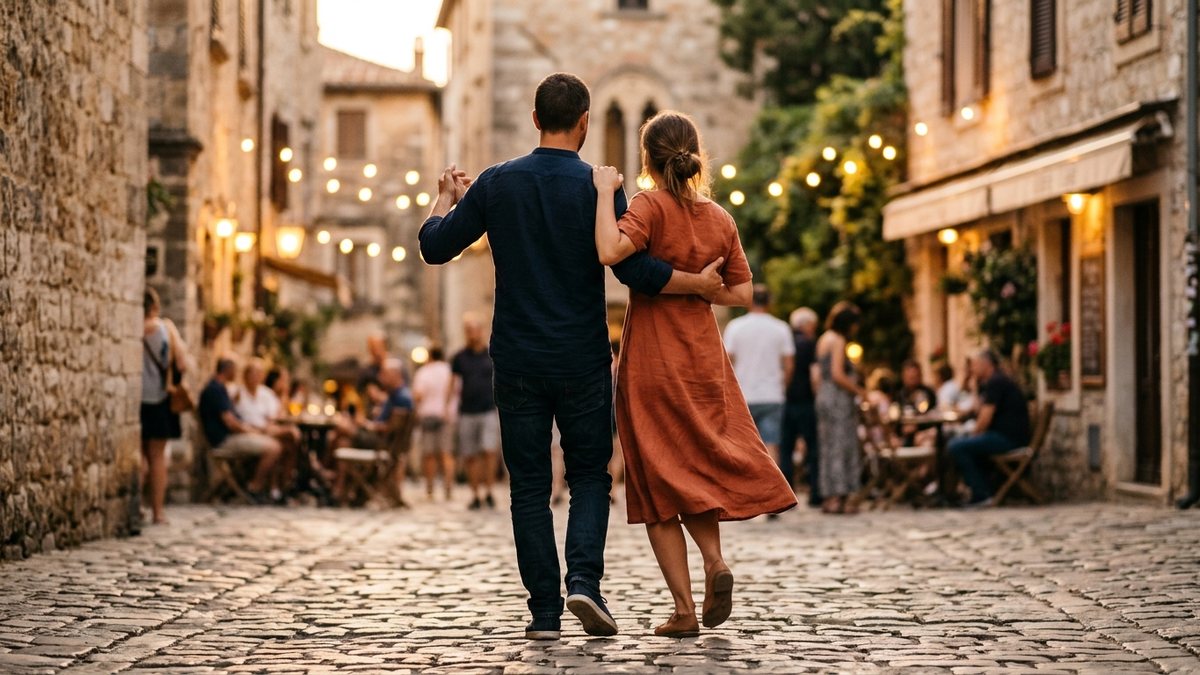
Images on this site are AI-generated illustrations, not photographs of real people, places or events.
Spotted something unnatural or wrong? Please tell us through the correction form (the form is in Japanese, but you can write in English).
The short answer: UNESCO’s “Representative List of the Intangible Cultural Heritage of Humanity” includes quite a few items of Latin music and dance. What I could confirm on the item pages of the official UNESCO site this time were tango (Argentina and Uruguay, 2009), merengue (Dominican Republic, 2016), rumba in Cuba (2016), bachata (Dominican Republic, 2019) and others. On the other hand, I did not find items for salsa or kizomba in a search of the UNESCO site. Also, the pages I opened did not say that an inscription is a system for deciding who is “number one in the world.” This article sorts out the official explanations as an entry point to the background of the songs and steps you are dancing now.
- Confirmed: tango, merengue, rumba in Cuba, bachata. I also opened and confirmed the item pages for candombe of Uruguay, samba de roda of Brazil, tumba francesa of Cuba, mariachi of Mexico, joropo of Venezuela and son of Cuba
- Not found: salsa and kizomba (no match in a search of the UNESCO site)
- What an inscription means: According to UNESCO, the purpose of the List is to show the diversity of intangible cultural heritage and raise awareness of its importance. Under the “representative” item, it says that intangible cultural heritage is not valued only for its exclusivity or its exceptional value compared with others
About this article
I live in Sapporo and am around 50 years old. In 2019 I discovered salsa and bachata, and I still dance today. I am not good at dancing, and I am not a teacher or an organizer. I am not a UNESCO expert either. For statements of fact, I stick to what I confirmed by opening the pages of the official UNESCO site (ich.unesco.org), and the date I checked was November 7, 2026. The parts marked “my summary” and “my suggestion” are my own thinking. They are not official explanations, and they are not anyone’s personal story. Where a page would not open, or where I could not confirm something, I say so.
What Is Intangible Cultural Heritage? UNESCO’s Explanation
According to UNESCO’s “What is Intangible Cultural Heritage?” page, intangible cultural heritage means traditional expressions and living practices. The examples it lists are oral traditions, performing arts, social practices, rituals and festive events, knowledge and practices concerning nature and the universe, and the skills of traditional crafts. The page takes the position that what matters more than the cultural expression itself is the knowledge and skills that are passed from generation to generation through it.
The same page describes the characteristics of intangible cultural heritage as follows.
- Traditional, contemporary and living at the same time: it includes not only what was inherited from the past, but also practices carried out now in rural and urban areas
- Inclusive: it may share expressions with other places, such as a nearby village or a city in a distant country, and it also includes what people who migrated have carried on in another place
- Representative: the page states that it is not valued as a cultural property only for its exclusivity or its exceptional value compared with others
- Community-based: it becomes heritage only when the people who create, protect and pass it on recognize it as their own heritage
The legal basis is UNESCO’s Convention for the Safeguarding of the Intangible Cultural Heritage (2003). Article 2 of the Convention defines intangible cultural heritage as the practices, representations, expressions, knowledge and skills, along with the instruments, objects and cultural spaces associated with them, that communities, groups and, in some cases, individuals recognize as part of their cultural heritage. Article 16 provides that, in order to ensure better visibility of the intangible cultural heritage, awareness of its significance and dialogue which respects cultural diversity, the Committee shall establish, keep up to date and publish a Representative List of the Intangible Cultural Heritage of Humanity.
What Does “Inscription” Mean? And What Doesn’t It?
UNESCO’s “Purpose of the Lists” page describes the Representative List as a list of elements that shows the diversity of intangible cultural heritage and raises awareness of its importance.
I separate out what I could and could not confirm.
- What I could confirm: the purpose of the List is to raise visibility and awareness and to encourage dialogue that respects cultural diversity (Article 16 of the Convention). Intangible cultural heritage is not valued only for its exclusivity or its exceptional value compared with others (the “representative” item on the “What is Intangible Cultural Heritage?” page)
- What I could not confirm: I did not find, in the pages I opened this time, a sentence that directly denies (or affirms) readings such as “what is inscribed has already been safeguarded” or “an inscription is proof of being number one in the world.” I could not confirm this point on UNESCO’s Representative List page (ich.unesco.org/en/representative-list-00559) or on its FAQ page (ich.unesco.org/en/faq-00, which would not open because of a 404)
As my own way of sorting it out, an inscription can be read as a system in which UNESCO puts on a list, and introduces, the fact that “there is a living practice there, and the people who carry it recognize it as their own heritage,” and not as a system that ranks things as “better than the others.” But this is something I read out of the official explanations above.
Note also that the Convention’s definition is “practices, representations, expressions, knowledge and skills” and so on, and the titles of the items are also written to point to music, dance and the whole of the practices around them, rather than to a pattern of steps itself. For example, the title of the Cuban rumba item means “a festive combination of music and dances and all the practices associated” (see below).
Latin Music and Dance on the UNESCO List
I line up, in order of the year of inscription, the ones whose item pages I opened and confirmed this time. “Latin” covers a wide range, so here I looked mainly at examples from Spanish- and Portuguese-speaking Latin America. I did not check every item on UNESCO’s List one by one, so there may be others that also fit.
| UNESCO item name | Country | Year inscribed (decision number) | Article on this site |
|---|---|---|---|
| La Tumba Francesa | Cuba | 2008 (3.COM 1. The page states it was first proclaimed in 2003) | - |
| Samba de Roda of the Recôncavo of Bahia | Brazil | 2008 (3.COM 1. The page states it was first proclaimed in 2005) | - |
| Tango | Argentina and Uruguay | 2009 (4.COM 13.01) | History of Argentine Tango |
| Candombe and its socio-cultural space: a community practice | Uruguay | 2009 (4.COM 13.74) | - |
| Mariachi, string music, song and trumpet | Mexico | 2011 (6.COM 13.30) | - |
| Music and dance of the merengue in the Dominican Republic | Dominican Republic | 2016 (11.COM 10.b.9) | - |
| Rumba in Cuba, a festive combination of music and dances and all the practices associated | Cuba | 2016 (11.COM 10.b.7) | - |
| Music and dance of Dominican Bachata | Dominican Republic | 2019 (14.COM 10.b.10) | History of Bachata |
| Joropo in Venezuela | Venezuela | 2025 (20.COM 7.b.1) | - |
| The practice of Cuban Son | Cuba | 2025 (20.COM 7.b.12) | Son, Mambo, Cha-cha-chá and Rumba |
The name of the list is, in every case, the “Representative List of the Intangible Cultural Heritage of Humanity.” For the item names, I wrote the English titles on UNESCO’s pages as they are.
Tango (Argentina and Uruguay, 2009)
According to UNESCO’s item page and decision text (4.COM 13.01), tango was a joint nomination by Argentina and Uruguay, and its inscription was decided in 2009 at the fourth session of the Intergovernmental Committee (Abu Dhabi). The decision page does not give the date of the session.
UNESCO’s own explanation is as follows.
- Tango was nurtured by the lower classes of the cities of Buenos Aires and Montevideo, in the Río de la Plata basin
- European immigrants, descendants of African slaves, native criollos and others mixed there, and various customs, beliefs and rituals blended into a distinctive cultural identity
- It is still danced today in the traditional dance halls of Buenos Aires and Montevideo
The decision text contains a description that places tango as a musical genre that includes music, dance, poetry and song, and as one of the main expressions of the identity of the people of the Río de la Plata basin. It also lists, as one of the inscription criteria, that the two countries have shown safeguarding measures. The flow of its history is in History of Argentine Tango, and the basics of the milonga (a tango party) are in Argentine Tango and Milonga.
Merengue (Dominican Republic, 2016)
The title of UNESCO’s item page is “Music and dance of the merengue in the Dominican Republic,” and it was inscribed in 2016 (11.COM 10.b.9). Sorting out UNESCO’s explanation, it is as follows.
- Merengue is regarded as part of the national identity of the Dominican people
- It is danced in pairs, and the participants move in a circle, using flirtatious gestures
- The skills and knowledge are passed on through observation, participation and imitation
- It attracts people from various social classes, and promotes respect and coexistence among individuals and groups
- The north of the country is regarded as the birthplace of this practice
- A presidential decree of 2005 set November 26 as the national “Merengue Day”
Rumba in Cuba (2016)
The title of UNESCO’s item page is “Rumba in Cuba, a festive combination of music and dances and all the practices associated,” and it was inscribed in 2016 (11.COM 10.b.7). UNESCO’s explanation is as follows.
- The music and movements of Cuban rumba are mainly tied to African culture
- It is a great symbol of the marginal layers of Cuban society and its identity
- UNESCO writes that the dance and song convey elegance, sensuality and joy
- It aims to connect people regardless of social and economic background, gender or ethnicity
- The practice has been passed down across generations through imitation in families and neighborhoods
Bachata (Dominican Republic, 2019)
The title of UNESCO’s item page is “Music and dance of Dominican Bachata,” and it was inscribed in 2019 (14.COM 10.b.10). Sorting out UNESCO’s explanation, it is as follows.
- Bachata is danceable music born when rhythmic bolero blended with other Afro-Antillean genres
- The word “bachata” is presumed to be of African origin, and originally referred to a lively gathering or party
- The Dominican people regard the music and dance of bachata as a cultural expression rooted in the land
- Its lyrics often express love, passion and nostalgia
- In performance, one or two guitars are used as lead instruments, and in recent years electric guitars are also widely used
- The dance is a couple dance characterized by sensual movements of the hips and a simple 8-step structure
On this page I did not find a description of a period such as “the 1960s.” How the beginning of bachata is dated also differs among other sources. History of Bachata and What Is Bachata? sort this out, including the range in how it is written.
Other Examples I Confirmed
- Candombe (Uruguay, 2009, 4.COM 13.74): In the Sur, Palermo and Cordón neighborhoods in the south of Montevideo, the call of the drums takes place on Sundays and many holidays. The largest and deepest drum, the “piano,” has features that differ among the three neighborhoods. These neighborhoods are said to be areas where people of African descent live. UNESCO writes that it is recognized as an expression of resistance, and at the same time explains that it is a musical festivity of Uruguay and a social practice carried out collectively
- Samba de roda (Brazil, 2008): A festive popular event that includes music, dance and poetry. One of its features is that participants gather in a circle, and in UNESCO’s explanation it is generally danced only by women, who step into the center of the circle one at a time. The page also states that it was first proclaimed in 2005
- Tumba francesa (Cuba, 2008): A style of dance, song and drumming that, UNESCO explains, was brought to Cuba by slaves from Haiti. Its popularity peaked at the end of the 19th century. The page also states that it was first proclaimed in 2003
- Mariachi (Mexico, 2011, 6.COM 13.30): Traditional Mexican music played on string instruments, which UNESCO describes as “a fundamental element of Mexican culture.” Learning by ear is the main way it is passed on. It is a music item, not a dance item
- Joropo (Venezuela, 2025, 20.COM 7.b.1): UNESCO explains it as a festive tradition born from the meeting of Indigenous, African and European peoples, combining music, poetry, song and dance. Instruments such as the harp, cuatro, maracas, violin and accordion are used, and in the dance a man and a woman pair up while keeping a certain distance. Its inscription is relatively recent, decided at the 20th session of the Intergovernmental Committee in 2025
- Son (Cuba, 2025, 20.COM 7.b.12): UNESCO explains it as a practice of traditional music and dance that combines song, instruments, rhythm and movement, performed in pairs or groups, and combining improvisation with fixed patterns. The lyrics are taken from daily life and passed on orally, and the influences of African and European music come together. The dance is tied to the music, and instruments such as the bass guide the dancers’ footwork, it says. It also writes that the tres, a string instrument, has an important role in the music. It is sorted out, as music that came before salsa, in Son, Mambo, Cha-cha-chá and Rumba
What About Salsa and Kizomba?
Salsa: When I searched for “salsa” on the UNESCO intangible cultural heritage site, no matching item was shown (“No result corresponding to your query”). So, within the range I confirmed this time, I did not find any information that salsa is inscribed on UNESCO’s List. However, this means only that I did not find it in the site search; I did not read every item on the List one by one to confirm. Within Cuban musical culture, rumba, tumba francesa and son are inscribed, as seen above. Son and the other music that came before salsa are covered in Son, Mambo, Cha-cha-chá and Rumba: The Cuban Music That Came Before Salsa. The music and rhythm of salsa are in What Is Salsa?, and its history is in History of Salsa.
Kizomba: Likewise, a search for “kizomba” showed no matching item. I did not find information about an inscription within the range I confirmed, so in this article I do not write about kizomba as if it were inscribed. For its history, please see History of Kizomba.
I think that not being inscribed and being of low value are separate matters. This is because, as we saw above, UNESCO explains that intangible cultural heritage is not valued only for its exclusivity or its exceptional value compared with others.
Using This as an Entry Point for People Who Dance in Sapporo (My Suggestion)
From here on, this is not an official explanation but my suggestion.
- Use it as an entry point to the background of the songs: When you dance bachata, for example, knowing UNESCO’s page explanations, such as “a word that originally referred to a lively gathering or party” and “music born when bolero blended with other genres,” may change a little how a song sounds to you. It will not improve your steps, but I think it can be a way to become more familiar with the music
- Don’t use it as “it’s correct because it’s inscribed”: I think an inscription is not about deciding the correctness of steps or ways of dancing. I think it is natural that teachers and groups teach differently. I think you will enjoy dancing more if you do not use an inscription as a standard for choosing a school or group, or as a reason to deny other ways of dancing
- There is not just one pattern of dancing in pairs: Even in UNESCO’s explanations, pair dances differ: merengue is danced moving in a circle, bachata has an 8-step structure, and in joropo the pair keeps a certain distance. To decide whether to start with salsa, bachata or tango, try reading What Is Salsa?, What Is Bachata? and Argentine Tango and Milonga side by side (my suggestion)
- Together with the basics of instruments and rhythm: If you want to approach from the music side, such as drums and guitars, Latin Dance Instruments and Rhythm Basics is a shortcut
FAQ
Which Latin dances are on the UNESCO intangible cultural heritage list?
What I could confirm on UNESCO’s item pages this time were tango (Argentina and Uruguay, 2009), merengue (Dominican Republic, 2016), rumba in Cuba (2016), bachata (Dominican Republic, 2019), candombe (Uruguay, 2009), samba de roda (Brazil, 2008), tumba francesa (Cuba, 2008), joropo (Venezuela, 2025), son (Cuba, 2025) and others. Mariachi (Mexico, 2011) is a music item. I did not check every item on the List, so there may be others.
Is salsa UNESCO intangible cultural heritage?
I searched for “salsa” on the UNESCO site, but no matching item was shown. Within the range I confirmed, I have not found information that it is inscribed.
Is kizomba inscribed?
A search for “kizomba” also showed no matching item. Within the range I confirmed, I have not found information about an inscription.
Does being inscribed as intangible cultural heritage mean being “number one in the world”?
The pages I opened did not say that it decides who is number one in the world. The purpose of the Representative List is to show the diversity of intangible cultural heritage and raise awareness of its importance. UNESCO also explains that intangible cultural heritage is not valued only for its exclusivity or its exceptional value compared with others.
Once something is inscribed, has it been safeguarded?
In the pages I opened this time, I did not find a sentence that directly addresses this. What I could officially confirm as the purpose of the List is to raise visibility and awareness.
Why are the item names left in English?
In this article I wrote the English titles that appear on UNESCO’s pages as they are. For the names of the dances in running text, I use the commonly used spellings.
Can I experience this music and dance in Sapporo?
This site does not list individual schools or parties, because such information changes easily. To look for dates, you can also use the Sapporo Latin Dance Calendar (external site) below.
Related articles
- History of Argentine Tango: From Port-City Music to UNESCO Intangible Cultural Heritage
- History of Bachata Dance: Origins in the Dominican Republic
- History of Salsa: From Cuban Music to New York and the World
- Latin Dance Instruments and Rhythm Basics: Salsa, Bachata, Kizomba and Tango
- Latin Dance Today: 4 Trends Spreading Around the World
You can also look up event dates on the Sapporo Latin Dance Calendar (札幌ラテンダンスカレンダー) (external site).
Sources
I opened and checked the following pages on November 7, 2026.
- UNESCO: What is Intangible Cultural Heritage? (definition, characteristics, the meaning of “representative”)
- UNESCO: Purpose of the Lists (the purpose of the Representative List)
- UNESCO: Text of the Convention for the Safeguarding of the Intangible Cultural Heritage (the definition in Article 2, the List in Article 16)
- UNESCO: Tango (2009, Argentina and Uruguay)
- UNESCO: Decision 4.COM 13.01 (Tango) (the decision text on inscription, the inscription criteria)
- UNESCO: Music and dance of the merengue in the Dominican Republic (2016)
- UNESCO: Rumba in Cuba, a festive combination of music and dances and all the practices associated (2016)
- UNESCO: Music and dance of Dominican Bachata (2019)
- UNESCO: Candombe and its socio-cultural space: a community practice (2009, Uruguay)
- UNESCO: Samba de Roda of the Recôncavo of Bahia (2008, Brazil)
- UNESCO: La Tumba Francesa (2008, Cuba)
- UNESCO: Mariachi, string music, song and trumpet (2011, Mexico)
- UNESCO: Joropo in Venezuela (2025, Venezuela)
- UNESCO: The practice of Cuban Son (2025, Cuba)
- UNESCO site search: salsa (no match)
- UNESCO site search: kizomba (no match)
- UNESCO site search: tango, candombe, samba, mariachi, joropo, Cuba (supplementary checks of item names, countries and years of inscription)
- UNESCO: Representative List (I opened it, but could not confirm any description of what an inscription means)
UNESCO’s FAQ page (ich.unesco.org/en/faq-00) returned a 404 and would not open, so I could not confirm its contents. The year of inscription of each item is the year and decision number written on that item’s page. In the Japanese original, the descriptions are my summary after reading the English pages, not UNESCO’s own Japanese translation; this English page is a translation of that Japanese text. If you find a mistake, please let me know.