History of Argentine Tango: From Port-City Music to UNESCO Heritage
Contents
This page is a reference translation of the Japanese original (日本語の原文). It has not been checked by a native speaker. Please confirm details with each organizer.
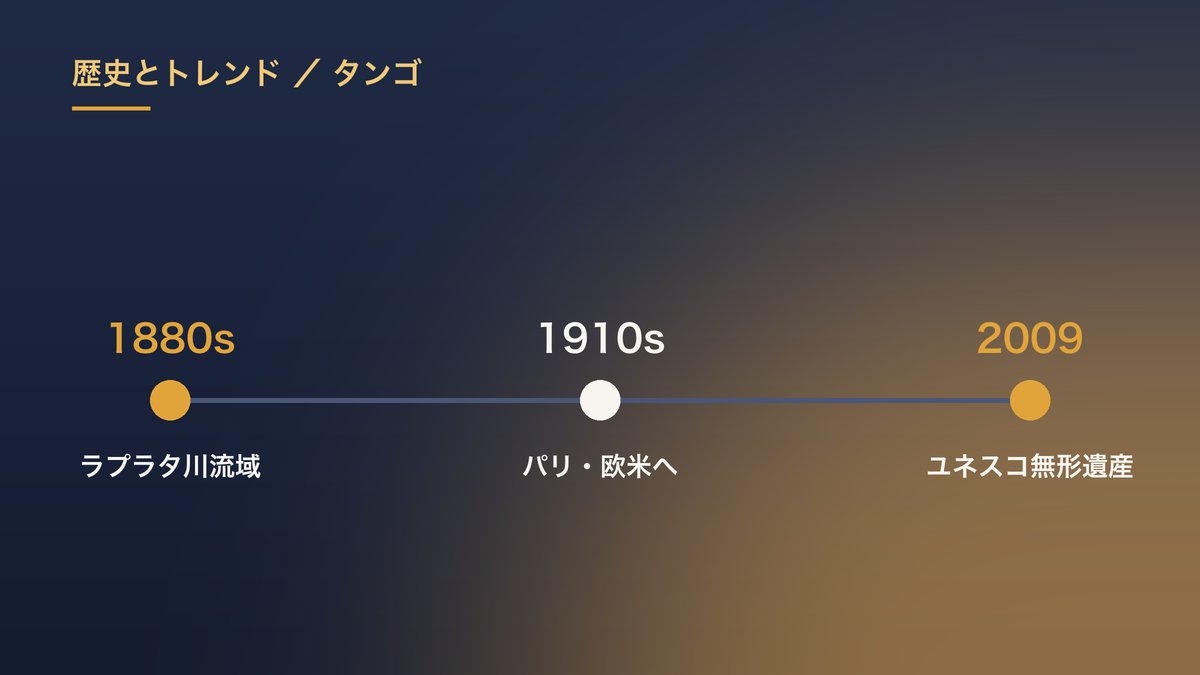
Argentine tango is said to have been born around the 1880s in the Río de la Plata region (Argentina and Uruguay). In 2009 it was inscribed on UNESCO’s Intangible Cultural Heritage list.
Argentine tango, danced as if walking quietly in an embrace, began as the music of port cities.
Born in the Río de la Plata region
Tango is said to have been born around the 1880s in the Río de la Plata region, on the border between Argentina and Uruguay (including Buenos Aires and Montevideo). It is explained that milonga (a music of Argentina), habanera (a music linked to Cuba and Spain), candombe (an Afro-Uruguayan rhythm) and others mixed together. At that time it seems to have been played in lively places such as bars in port towns.
From Paris to the world
In the early 20th century, musicians and dancers from Buenos Aires went to Europe, and tango became a huge fad in Paris. After that it spread to London, Berlin and other cities. It is explained that it reached New York around 1913.
The golden age and new tango
The period from the late 1930s to the 1950s (mainly the 1940s, it is said) is sometimes called the golden age of tango. Later, Astor Piazzolla created “nuevo tango” (new tango), which brought in elements of jazz and classical music.
Inscribed as UNESCO Intangible Cultural Heritage
In 2009, tango was inscribed on UNESCO’s Intangible Cultural Heritage list, on a joint proposal by Argentina and Uruguay.
Passed on through milongas
Today, “milongas” (places for dancing) are held all over the world. People keep dancing tango, along with customs such as the tanda and the cabeceo. Customs differ by region and organizer. The basics are summarized in Argentine Tango and Milonga.
Related articles
Sources
- Wikipedia “History of the tango”
- UNESCO Intangible Cultural Heritage (where to confirm the 2009 inscription)
Note: the history here is an overview based on public information such as the sources above. Many details have several theories.