What Is Brazilian Zouk? Origins, Music and Movement Explained
Contents
This page is a reference translation of the Japanese original (日本語の原文). It has not been checked by a native speaker. Please confirm details with each organizer.
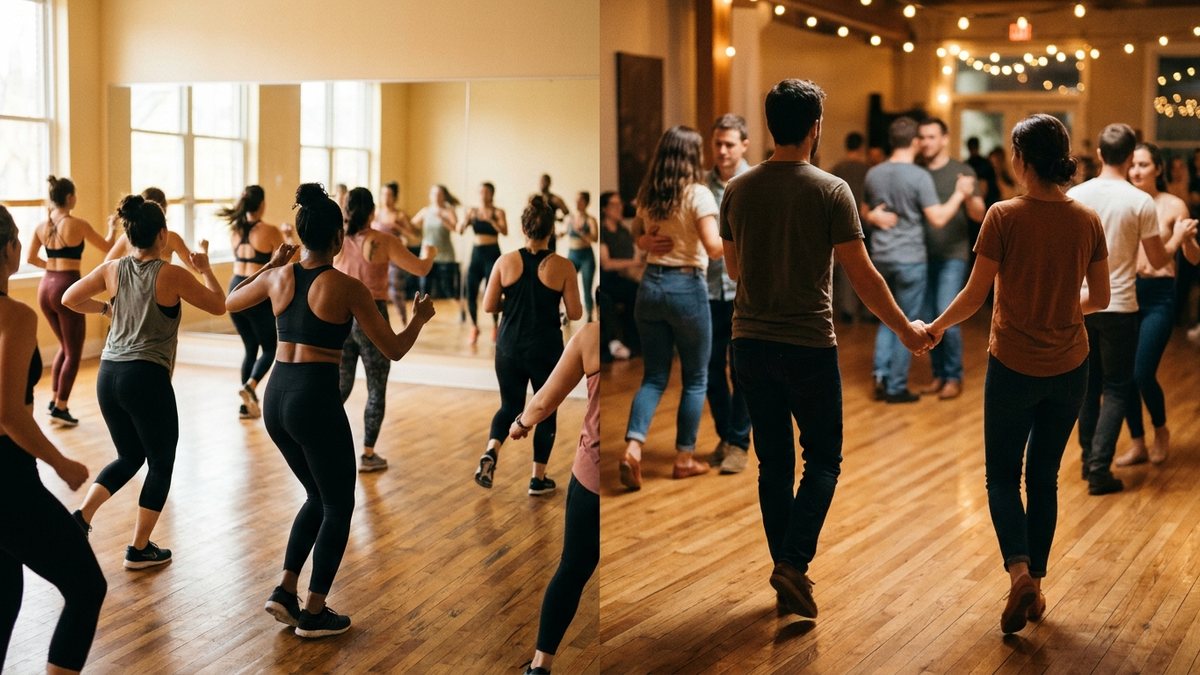
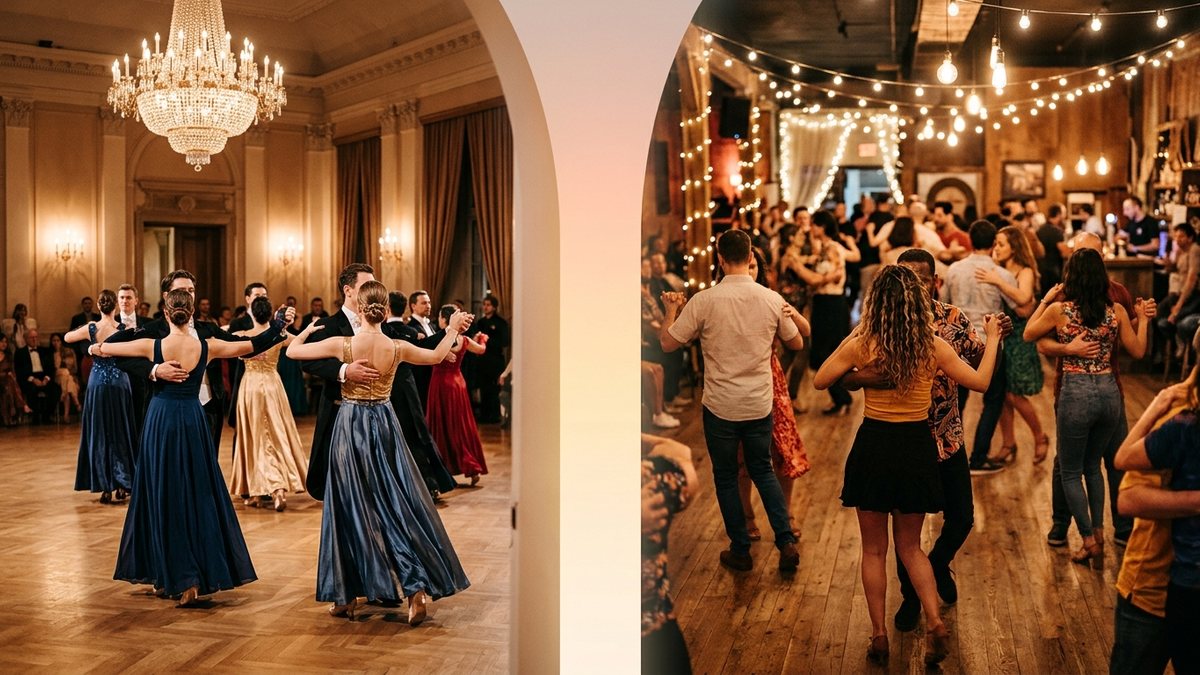
Images on this site are AI-generated illustrations, not photographs of real people, places or events.
Spotted something unnatural or wrong? Please tell us through the correction form (the form is in Japanese, but you can write in English).
Brazilian Zouk is a partner dance said to have developed in Brazil in the early 1990s. It is explained that it grew out of lambada and came to be danced to the Caribbean music called “zouk.” Its features are flowing movements, such as body waves and tilting off the axis. However, sources explain some points differently, such as where it began. This article sums it up as far as could be confirmed.
About this article
I live in Sapporo and am around 50 years old. In 2019 I discovered salsa and bachata, and I still dance today. In this article I do not write about my own experience. I limit it to sorting out published information. I am not good at dancing, and I am not a teacher.
What is Brazilian Zouk?
It is a partner dance that began in Brazil. It is explained that it developed from lambada in the early 1990s.
- Lambada lost its popularity in the early 1990s. It is explained that at that time, people who had been dancing lambada reworked the dance to fit new music
- The music they used is “zouk,” which was born in the French-ruled Caribbean (the Antilles). Because the lyrics of zouk are in a French-based Creole language, it is said to have been casually called “French Lambada” at one time
- The name “Brazilian Zouk” is introduced as having been decided by a vote at a competition in Belo Horizonte, Brazil, in 2006
The word “zouk” is used for both the music and the dance. The “zouk” said to be one of the roots of kizomba is the Caribbean music. For more, see History of Kizomba: How Angola’s “Party” Spread Around the World.
There are different views on where it began
- One organization (the Brazilian Zouk Dance Council) explains that Rio de Janeiro was the place of origin, and that two teachers reworked lambada movements to fit new music
- On the other hand, a 2023 academic study is also introduced as giving more weight to regions such as Pará and Porto Seguro
- Some sources also explain that there is no single accepted view
Here I do not say flatly “it was Rio.” I only report that the explanations differ.
Music and movement
The music is mainly Caribbean zouk. It is explained that people also dance to R&B, pop, hip-hop and other music. At parties in particular, it is said to be danced to a variety of songs. The sources I checked did not give tempo numbers.
These points are introduced as features of the movement.
- Smooth, continuing movement: Made of weight changes, forward and back steps and turns, so the movement is not easily broken
- Body waves: Moving the torso like a wave. It is explained as the source of the flowing look
- Tilting off the axis: Moving while leaning the body from an upright position, staying connected to your partner. Leading the follow’s upper body off the axis is said to be the most zouk-like feature
- Head movement: Said to be a difficult element. It is explained that it is done together with changes in body angle, and is not just swinging the head
- Isolation (moving parts of the body separately)
- Changes of hold: Moving back and forth between an apart form and a close form
It is explained that the movement can be small or large depending on the music and the size of the space. The sources I checked did not give a detailed way to count the steps.
There are several schools of style
The English-language Wikipedia and other sources introduce the following styles within Brazilian Zouk.
- Rio style (traditional): Has named basic patterns. It can move in straight lines or in circles
- Lamba Zouk: Said to be the closest to lambada. The movement continues without stopping
- Neozouk, Zouk Flow and others: Newer trends. It is explained that styles influenced by hip-hop and contemporary dance are increasing
How styles are divided and named differs by teacher and region. There is also a caution that the sources for this part are mainly the organizations’ and schools’ own materials for each style, and are hard to call neutral.
How is it danced around the world?
- Some explanations say that in Brazil it is not danced as widely as forró or samba
- Outside Brazil, it is introduced as having many events in Europe and the United States, and also some in Asia and Latin America
- It is said that there are festivals and competitions in many parts of the world
How should a first-timer see it?
- It is explained that beginners can start with the basic steps and turns, and leave big head movements for later
- It is explained that small movements and pauses can sometimes suit the moment better than big movements
- Lead and follow are “roles” and are not decided by gender, it is explained (What Are Lead and Follow? A Beginner’s Guide to the Roles in Latin Partner Dancing)
- If you have concerns about your body, try talking to your teacher
When you sign up for a school or a trial lesson, try asking the following.
- “Which style do you teach (Rio style, etc.)?”
- “Do you teach head movement in the beginner class?”
- “Are body waves and similar moves taught after the basics?”
Can I find zouk in Sapporo?
On the Sapporo Latin Dance Calendar (札幌ラテンダンスカレンダー) (external site), I did not find the word “zouk” on the four pages (Salsa, Bachata, Kizomba; Tango; Ballroom Dance; Lesson Information) or on the top page, as far as I checked on October 31, 2026. I have not confirmed any zouk schools or events in Sapporo for this article. If I find some, I will add them here. More is in Irregular Latin Dance Events in Sapporo: A Guide by Dance Style.
“Bachazouk,” which brings zouk movement into bachata, is introduced in What Is Bachazouk? A Fusion of Bachata and Brazilian Zouk.
FAQ
Are zouk and Brazilian Zouk the same?
No. “Zouk” refers to a music genre from the Antilles islands in the Caribbean. Brazilian Zouk is a partner dance that developed in Brazil to that music.
Is it the same dance as lambada?
No. Lambada is said to be its predecessor. It is explained that Brazilian Zouk grew out of lambada, with new ideas about movement and ways of teaching added.
Do I have to move my head a lot?
It is explained that beginners can start with the basic steps and turns, and learn big head movements later.
How is it different from Bachazouk?
Brazilian Zouk is a partner dance danced to zouk music. Bachazouk is a fusion that brings zouk movement into bachata music and steps.
Related articles
- What Is Bachazouk? A Fusion of Bachata and Brazilian Zouk
- History of Kizomba: How Angola’s “Party” Spread Around the World
- Kizomba vs Urban Kiz: What’s the Difference? A Beginner’s Guide
- What Are Lead and Follow? A Beginner’s Guide to the Roles in Latin Partner Dancing
- Irregular Latin Dance Events in Sapporo: A Guide by Dance Style
- Salsa, Bachata, Kizomba or Tango? Choosing a Dance in Sapporo
Sources I checked
I checked the following pages, among others, in October 2026.
- Brazilian Zouk Dance Council: History of Brazilian Zouk Dance
- Salsa Vida: Brazilian Zouk
- Wikipedia: Brazilian Zouk
Where sources differ in wording or classification, I give the range of explanations. If you find a mistake, please let me know through Contact (Japanese).