Bachata Styles Explained: Dominican vs Modern vs Sensual
Contents
This page is a reference translation of the Japanese original (日本語の原文). It has not been checked by a native speaker. Please confirm details with each organizer.
Images on this site are AI-generated illustrations, not photographs of real people, places or events.
Spotted something unnatural or wrong? Please tell us through the correction form (the form is in Japanese, but you can write in English).
Bachata has styles called Dominican (traditional), Modern (Moderna) and Sensual. Roughly speaking, it is explained that Dominican centers on footwork and playing with the rhythm, Modern on patterned partner combinations, and Sensual on the size of body movement. However, the names change by school and region, and sources explain them differently. This article sums up the three as far as could be confirmed, and also shows what to ask before you start learning.
About this article
I live in Sapporo and am around 50 years old. In 2019 I discovered salsa and bachata, and I still dance today. I am not good at dancing, and I am not a teacher. The explanations here are limited to what I could confirm in published information.
The short answer: how to sort out the three
| Dominican (traditional) | Modern | Sensual | |
|---|---|---|---|
| In one phrase | Centered on footwork and playing with the rhythm | Centered on patterned partner combinations | Centered on body movement |
| Typical movement (as sources explain) | Quick footwork with fast changes of direction, syncopation (small breaks in the beat) | Combinations such as turns, with set lines of movement | Body waves, circular movement, moving parts of the body separately |
| Where it began (as sources explain) | Dominican Republic | Dance schools in Europe and North America (said to be the late 1990s) | Cádiz, Spain |
| Distance from partner (as sources explain) | Sources differ | No clear explanation in sources | Described as dancing in a close connection |
This table shows only the “common explanation.” Even the same word can mean slightly different things depending on the school or teacher.
What is Dominican?
Dominican is a style that grew up in the Dominican Republic, the birthplace of bachata, mainly in social settings. Some people call it “traditional.” It is explained that in the international dance scene it is often called “Dominican” to tell it apart from Modern and Sensual.
- Footwork is the center. Quick changes of direction and syncopation are said to be its features
- It also has partner combinations and turns, but one explanation says they are not the center
- Rather than learning patterns and repeating them, it is introduced as playing in response to the sounds of instruments such as the guitar in the music
- One explanation says the basic step is easy to start with, but timing, balance and syncopation get harder the more used to it you become
On distance from the partner, sources differ. One explanation describes a form where partners dance body to body. Another says there is a lot of moving apart and coming close again, and that closeness is not the center. Please take both as “this is how it is explained.”
What is Modern?
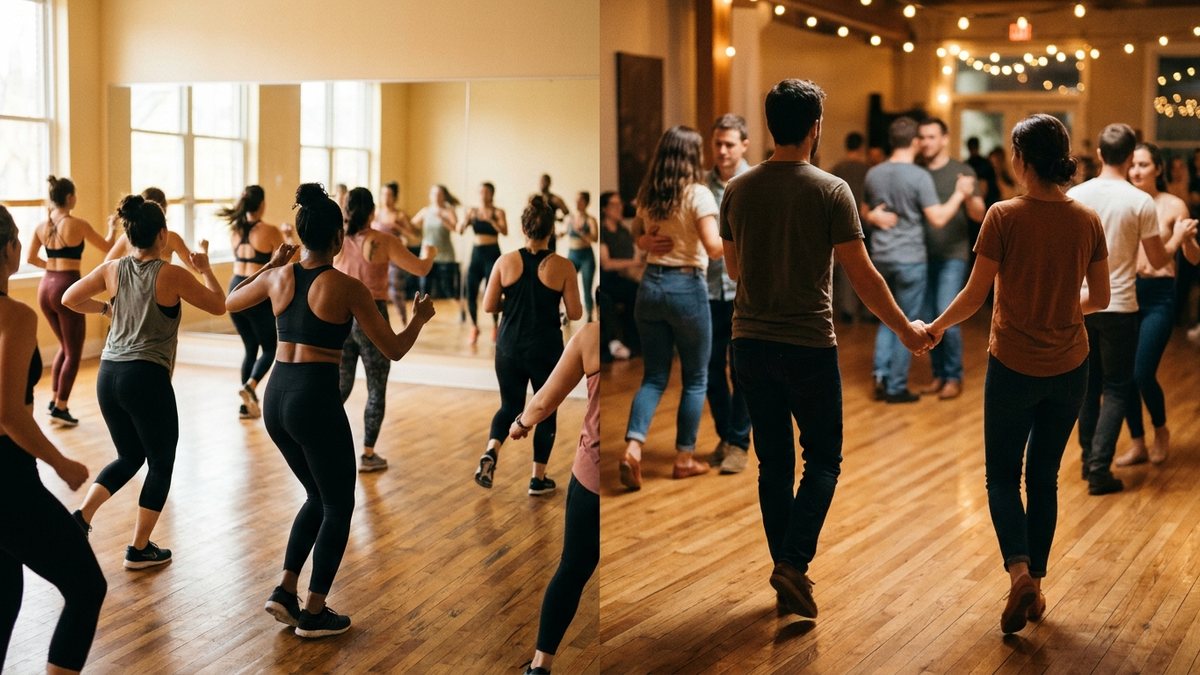
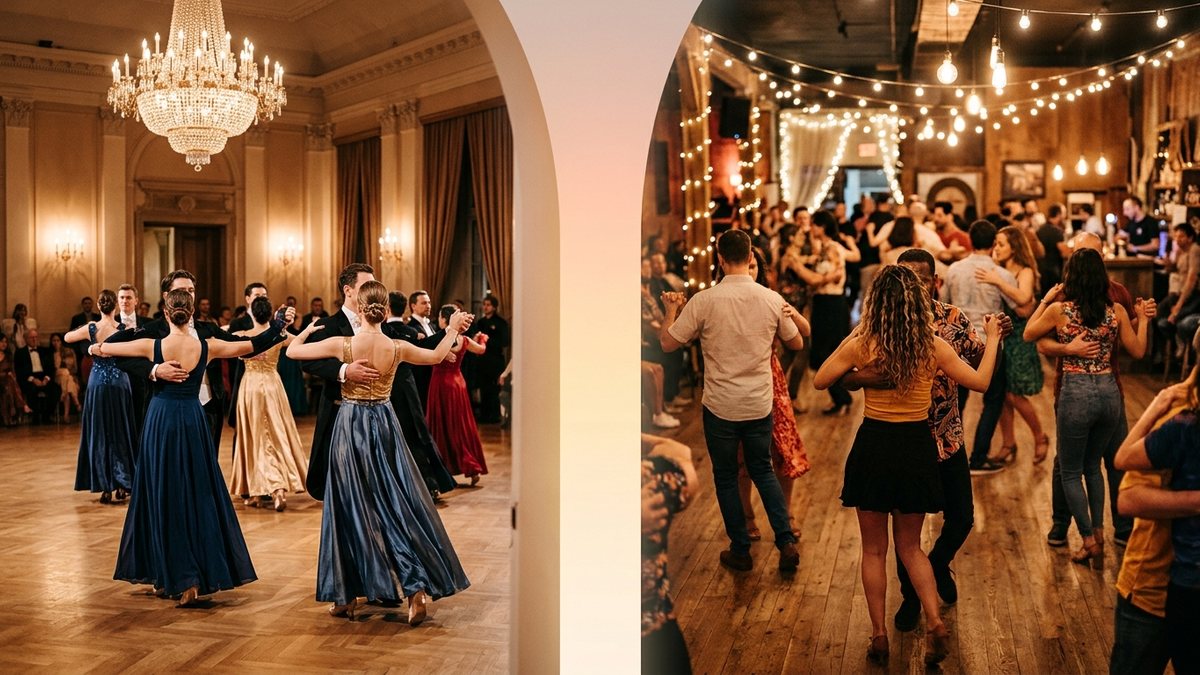
Modern is introduced as one of the styles most often taught in classes around the world. It is explained as a style with many partner combinations, taking in elements of partner dances taught in classes, such as salsa and ballroom dancing.
- It is introduced as having spread in dance schools in Europe and North America in the late 1990s. The sources do not say where it first began
- It is explained as a style that organizes the basic bachata movement into movement to the side and teaches it that way
- Of the three, it is said to be the style most centered on “patterns”
- One explanation says turns and other combinations are danced along set lines of movement. Another explanation says “turns and tricks are limited, and there are many dips (leaning back).” The explanations do not agree
The word “Modern” is also used in different ways. It is said that it can mean all bachata taught in classes other than Dominican, or only a narrow style centered on turns.
What is Sensual?
Sensual is said to be a style that grew up in Cádiz, in southern Spain. It is introduced as having been organized and spread as a way of teaching by Korke Escalona and Judith Cordero.
- Body movement is the center. Body waves, circular movement, isolation (moving parts of the body separately) and dips are said to be used
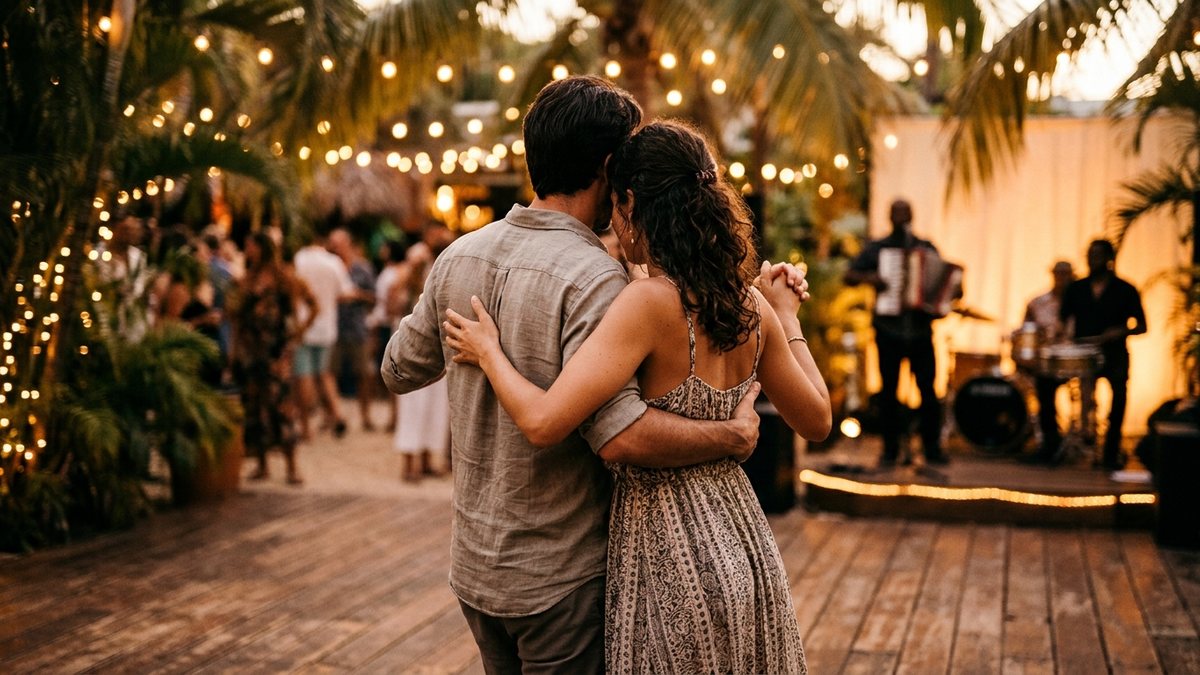
- The connection with the partner is close, and it is introduced as having a soft feel of stretching and returning
- One explanation says it is like the body-wave movement of Brazilian Zouk. A style that takes in elements of zouk is covered in What Is Bachazouk? A Fusion of Bachata and Brazilian Zouk
- One explanation says that moves such as body waves tend to appear in slow songs and in relaxed parts of a song
Of the three, Sensual is said to be the style on which opinions differ most. Some people see it as a natural development of Modern, while others feel it has moved away from the original Dominican dance. Some explanations also separate the name of a teaching method (a brand) from “Sensual” as a word widely used in social dancing.
Are there other names?
- Urban (Urbana): The meaning is not fixed. It can mean the bachata of Dominican people who moved to New York, influenced by R&B and hip-hop. In dance settings, it is said that some people use it with almost the same meaning as Modern, and others use it for a more street-oriented style that puts weight on riding the rhythm
- Bachatango: A style that mixes tango-like movement into bachata. It is described as a niche fusion
- Bachazouk: A style that mixes bachata and Brazilian Zouk
- Bachata Fusion: The widest name. It can mean bachata mixed with another style, or dancing a mix of Dominican, Modern and Sensual
It is explained that there is no official classification used worldwide, and that names differ by teacher and region. In social dancing, many people are said to mix styles.
Which should a beginner learn first?
In the sources I checked, I found no fixed answer like “beginners should start with this one.”
- The basic step is generally “three steps to the side, then a tap on the fourth beat” (What Is Bachata? Music, Basic Steps and Styles). It differs by style
- Which style is taught differs by school and teacher, so I think it is enough to follow the style of a class you can get to
- I did not find a rule used worldwide, such as “learn in this order,” in the sources I checked
- In styles with a close distance, care for your partner matters especially. Please also read How to Ask for a Dance and Say No: Social Dance Etiquette
When you sign up for a school or a trial lesson, try asking the following.
- “Which style do you teach (Dominican, Modern, Sensual, etc.)?”
- “Do you teach from the basic steps in the beginner class?”
- “Is that style close to the way people dance at parties?”
This article has not confirmed which styles individual schools in Sapporo teach. How to look for classes is covered in How to Find Salsa, Bachata & Latin Dance Classes in Sapporo.
FAQ
Which of the three is for advanced dancers?
None is fixed as the advanced one. One explanation says that in Dominican, the basic step is easy to start with, but timing, balance and syncopation get harder the more used to it you become. How hard each feels differs from person to person.
Is Sensual the only style with a close distance?
Sources explain Sensual as having a close connection. But some sources also say Dominican has forms where partners dance body to body. Do not decide by the name of the style alone. It matters to check how your partner feels in the moment.
Can I change styles partway?
The sources for this article did not say whether you can change styles partway. It is explained that many people mix styles in social dancing. Schools also have their own policies, so please talk to your teacher.
Are there schools in Sapporo where I can learn Sensual?
This article does not list individual schools or dates in Sapporo. You can also look up event dates on the Sapporo Latin Dance Calendar (札幌ラテンダンスカレンダー) (external site).
Related articles
- What Is Bachata? Music, Basic Steps and Styles
- History of Bachata Dance: Origins in the Dominican Republic
- Salsa vs. Bachata: Differences and Which to Start With
- What Is Bachazouk? A Fusion of Bachata and Brazilian Zouk
- Salsa On1 vs On2 vs Cuban Style: What’s the Difference? Which Should Beginners Learn?
- What Are Lead and Follow? A Beginner’s Guide to the Roles in Latin Partner Dancing
Sources I checked
I checked the following pages, among others, in October 2026.
Where sources differ in wording or classification, I give the range of explanations. If you find a mistake, please let me know through Contact (Japanese).