Dance Hygiene and Etiquette: Sweat, Smell and Perfume, and What to Say If It Bothers You
Contents
This page is a reference translation of the Japanese original (日本語の原文). It has not been checked by a native speaker. Please confirm details with each organizer.
Images on this site are AI-generated illustrations, not photographs of real people, places or events.
Spotted something unnatural or wrong? Please tell us through the correction form (the form is in Japanese, but you can write in English).
The short answer: worries about sweat and smell get lighter with three habits. Get ready beforehand, carry a few small items in your bag, and make a small move when something bothers you. This is my own view (my suggestion). The pages of overseas dance schools and groups that I checked give advice in the same spirit: bathe, wear clean clothes, take care of your mouth, go light on scent, and bring a towel and a change of clothes. You do not need to be perfect. It is enough to look out for each other.
About this article
I live in Sapporo and am around 50 years old. In 2019, I discovered salsa and bachata, and I still dance today. I am not good at dancing, and I am not a teacher or an organizer. This article has no personal story about sweat or smell. For facts, I stick to what I confirmed by opening public pages, and the date I checked was November 14, 2026. The parts that say “for example” or “a safe choice” are my own suggestions.
First, here is what I could not confirm. This time, I did not find any public material or group guideline in Japanese that focuses on grooming at Latin dance events. The next section covers pages from overseas schools and groups. They do not necessarily apply to events in Sapporo, so please check the rules in each organizer’s notice.
The basics of dealing with sweat are in Taking Care of Your Body on Latin Dance Days. What to bring and what shoes to wear are in What to Wear and Which Shoes for Latin Dance. Accessories are in Protecting Your Bags and Valuables at Dance Events. This article stays with what matters when you dance close to others: smell, scent and how to say something.
What Do Dance Schools and Groups Say About Grooming?
All of these pages are in English. They come from schools and groups for modern jive, swing, tango and ballroom dancing (社交ダンス), not Latin dance. They are not rules for Latin dance events. They are examples of guidance from overseas.
- The dance school Fevah Modern Jive advises you to brush your teeth, take a shower, and use antiperspirant and clean clothes before you dance. It says to stay home if you are not feeling well, and to bring a towel and a change of clothes if your hands tend to get damp. It also says that people who find it hard to notice their own smell can ask a friend for an honest opinion
- The World Swing Dance Council (WSDC) (guidance for swing dancers) says to wash your hands often, check your hands and nails for sharp parts, brush your teeth or use mints, use plenty of deodorant, and go light on perfume. It says people who sweat a lot should bring a spare shirt (top) and a towel. It also warns that some venues are fragrance-free, so you should check before you go
- The tango school SoTango writes that you should shower before dancing if you can, bring a fresh shirt if you come straight from work and cannot shower, avoid foods that leave a smell, and go light on perfume
- The dance studio Arthur Murray Live (an article from 2015) lists mints, a small towel and deodorant in your bag, less scent being better, and tying back long hair
What several of the pages share is this: “be clean before you dance,” “pay attention to your mouth and your food,” “go light on scent,” and “if you sweat, bring a towel and a change of clothes.” In what I checked, I did not find a unified rule for events in Japan.
What Can You Do Beforehand to Feel at Ease?
From here on, these are my suggestions, based on the guidance above.
- By the day before. Wash the clothes you plan to wear
- Before you leave home. Take a bath or shower and brush your teeth. It feels easier to eat less of strongly smelling food before you dance
- Hands, nails and hair. Check that nothing on your nails can catch, and tie back long hair
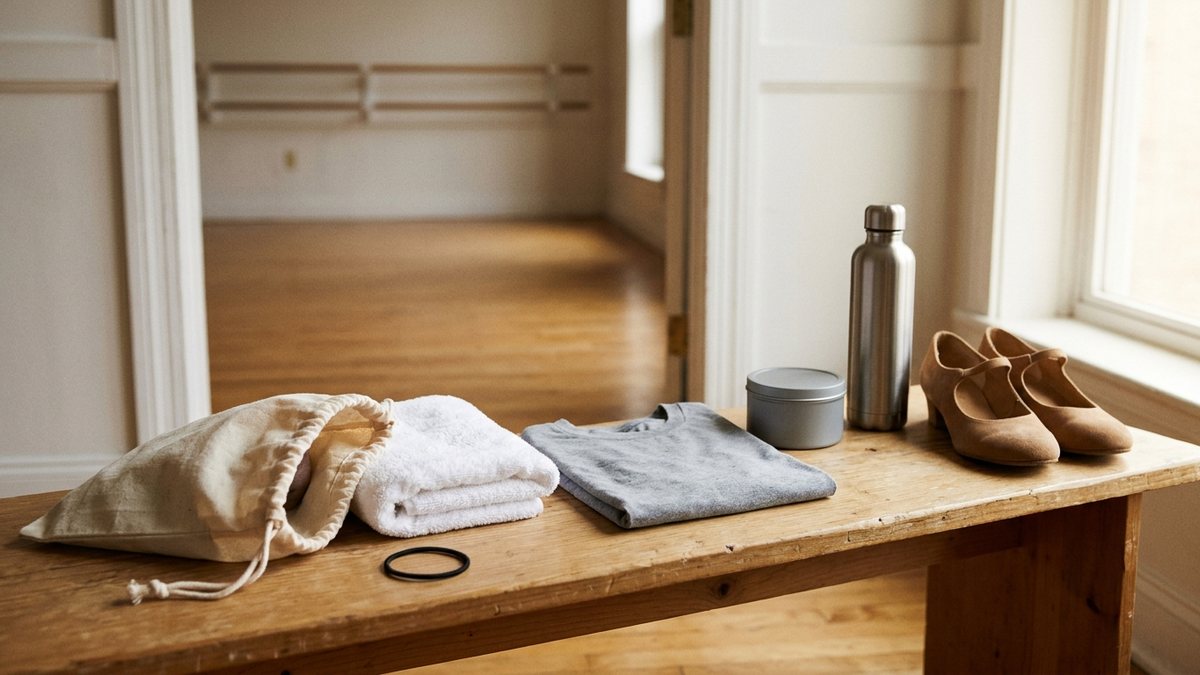
- A small pouch in your bag. If you pack a small towel, a spare top, mints or a handkerchief, and something to drink, you do not have to look for them at the venue
You do not have to do everything. If I had to pick one, I would recommend bringing one spare top. I think it prepares you for both sweat and smell, and lets you focus on dancing. Whether there is a place to change depends on the venue. If the notice does not say, it is reassuring to ask before you go.
What About Perfume and Scent?
The dance guidance that mentions scent (WSDC, SoTango and Arthur Murray Live) all says to go light. There is also public material. The explanation page for the awareness poster “Some People Are Troubled by That Scent” (その香り困っている人もいます) from the Consumer Affairs Agency (消費者庁) says that it was created by seven ministries and agencies, including the Consumer Affairs Agency, the Ministry of Education, Culture, Sports, Science and Technology (文部科学省), the Ministry of Health, Labour and Welfare (厚生労働省) and the Ministry of the Environment (環境省). It says the aim is to help people understand that people sense scents differently, and that even a scent that is pleasant to you may trouble others. As background, it also says that consumer affairs centers across Japan have received consultations from people who get headaches or nausea from the scent of items such as fabric softener. This site does not make any judgment about the relationship between scents and health.
This is my suggestion. At events where you dance close together, if you are unsure, “no perfume, or only a very little” and “avoid strongly scented fabric softener” are a safe choice. This is not about denying people who like scents. The idea is that when people are close together, less is safer.
What If Something Bothers You While You Are Dancing?
- Sweat. Wipe off with a towel between songs. If your hands get damp, wipe them before you dance with the next person, and they will feel at ease too (this is based on Fevah’s guidance)
- Your mouth. There are easy ways, such as drinking water or using a mint
- Changing clothes. Take a break and change in a place where changing is allowed
- When you want to rest. “It’s a bit warm, so I’ll take a break” is reason enough (my suggestion)
I think sweat and smell can happen to anyone (my suggestion). If you notice and take care of it, that is enough.
What If You Are Not Feeling Well?
Fevah’s guidance says to stay home if you are not feeling well. WSDC has an example phrase for when you feel a risk of physical or psychological harm from the person you are dancing with: stop dancing right away, say “I’m sorry, I’m not feeling well, so I’ll sit out the rest of this dance,” and leave the floor. It is not guidance for your own poor health. It is an example of how to leave the situation.
If you have a cough, the Ministry of Health, Labour and Welfare’s “Cough Etiquette” (咳エチケット) page lists three things: wear a mask (covering from the nose to the chin with no gaps), cover your mouth and nose with a tissue or handkerchief, and cover them with the inside of your jacket or your sleeve. It says that practicing these is important in places where people gather. The page does not say anything about going out when you are unwell. This site cannot make a medical judgment about whether you should take part. If you are unsure, rest without forcing yourself, check with the organizer, and if symptoms continue, consult a medical institution (my suggestion).
How Can You Say Something, or Say No?
When you are worried about your own smell or sweat
If it is hard to say something, you can simply say nothing and change your clothes during a break. Another way is to say a quick word before you dance: “I sweat easily, so I’ll use my towel first.” If the other person says something to you, try not to take it as being blamed. Saying “Thank you for telling me” and then taking a break or changing is enough (my suggestion).
When you are bothered by the other person’s smell or sweat
Before you start dancing, you may say no. You do not need a reason (How to Ask for a Dance and Say No). For example, “Thank you, I’m going to rest for now” is enough.
If you are already dancing, you can say “Thank you” at the end of the song and step away (the same kind of phrase is in Greetings and Personal Space at Latin Dance Parties). It is also fine to stop in the middle of a song.
I think it is very hard to tell a person directly about their smell. There can be many reasons, so I also think it is better not to jump to conclusions. If you are unsure, or if it bothers you again and again, you can talk to the organizer or staff (Uncomfortable or in Trouble at a Dance Event?).
When a scent is strong and bothers you
Changing your place is one way: “I’ll rest near the window for a bit.” I think it is fine to tell the organizer, “The strength of the scent bothers me.”
FAQ
If I take a shower before I come, will I still smell once I sweat?
I do not know. This site cannot explain the causes of smell or differences between people. If you have ways to prepare for when you sweat, such as wiping off or changing clothes, you can feel more at ease.
Should I use deodorant?
The guidance from Fevah, WSDC and Arthur Murray Live mentions using it. This site does not advise on how to choose products. Strongly scented products can reach other people too (my suggestion).
What if the venue has no place to change?
You can wear a top you can layer, wipe off often with a towel, or freshen up in the restroom (my suggestion). Please check the venue’s notice first.
Related articles
- Taking Care of Your Body on Latin Dance Days: Sweat, Water, Tired Feet and Next-Day Care
- What to Wear and Which Shoes for Latin Dance (Sapporo Winter Too)
- Protecting Your Bags and Valuables at Dance Events: Bag Theft, Lost Items and Cloakroom Basics
- How to Ask for a Dance and Say No: Social Dance Etiquette
- Greetings and Personal Space at Latin Dance Parties: Hugs, Beso and What to Say Before and After a Dance
- Uncomfortable or in Trouble at a Dance Event? What You Can Do and Who to Contact in Japan
- Heatstroke at Dance Events in Sapporo in Summer: Water, Clothing and How to Rest
- Your First Latin Dance Social: What to Expect from Arrival to Going Home
You can also look up event dates on the Sapporo Latin Dance Calendar (札幌ラテンダンスカレンダー) (external site).
Sources
I checked the following pages on November 14, 2026.
- Fevah Modern Jive: Dance Etiquette (no date shown)
- World Swing Dance Council: Social Etiquette for Swing Dancers (no date shown on the page; it says this is an excerpt from an original text updated in 2019)
- SoTango: Personal hygiene in class (no date shown)
- Arthur Murray Live: Great Ballroom Dance Etiquette (article of December 3, 2015)
- Consumer Affairs Agency (消費者庁): Other (consumer safety), explanation of the “Some People Are Troubled by That Scent” poster (Japanese)
- Consumer Affairs Agency: The “Some People Are Troubled by That Scent” poster has been posted (July 11, 2023) (Japanese)
- Ministry of Health, Labour and Welfare (厚生労働省): Cough Etiquette (咳エチケット) (Japanese)
There are also things I could not confirm. I could not confirm a public material or group guideline in Japanese that focuses on grooming at Latin dance events, the rules of each event in Sapporo, or the text of the Consumer Affairs Agency poster itself (the PDF). The overseas pages reflect each school’s or group’s own thinking, and some have no date. They do not necessarily apply to events in Sapporo. This article cannot make judgments about the causes of body odor, bad breath or sweat, or about medicine and health. If you find a mistake, please let me know through Contact (Japanese).