Protecting Your Bags and Valuables at Dance Events: Bag Theft, Lost Items and Cloakroom Basics
Contents
- About this article
- What Do Public Agencies Say About Bags and Valuables?
- What Should You Do With Your Bags and Valuables While You Dance?
- Does the Venue Have a Cloakroom, Lockers or a Bag Area?
- What Should You Do With Accessories and the Contents of Your Pockets When You Dance?
- What Should You Do If You Lose or Leave Something Behind?
- If You Lose Your Cards or Your Phone Payments, Whom Should You Contact?
- FAQ
- Related articles
- Sources
This page is a reference translation of the Japanese original (日本語の原文). It has not been checked by a native speaker. Please confirm details with each organizer.
Images on this site are AI-generated illustrations, not photographs of real people, places or events.
Spotted something unnatural or wrong? Please tell us through the correction form (the form is in Japanese, but you can write in English).
The short answer: to protect your bags and valuables at a dance event, keep four things in mind and you are less likely to be in trouble. “Carry only what you need.” “Check before you go, in the event notice, whether there is a place to leave your bags.” “Count your belongings before you leave the venue.” “If you lose something, ask the venue, file a lost property report with the police, and contact the card issuer or mobile phone company right away for cards and phones.” That is my view (my suggestion). I wrote this as general preparation for things that can happen at any venue. It is not about suspecting any particular venue, organizer or participant.
About this article
I live in Sapporo and am around 50 years old. In 2019 I discovered salsa and bachata, and I still dance today. I am not good at dancing, and I am not a teacher or an organizer. This article has no personal story, such as having a bag stolen or losing something. For facts, I stick to what I confirmed by opening official pages, and the date I checked was November 8, 2026. The phrases that start with “for example,” and the parts where I say “it is safe to…” are my own suggestions. They are not anyone’s personal story.
First, what I could not confirm. In this research I could not find a current page of the National Police Agency or the Hokkaido Prefectural Police that deals only with bag theft (unattended-bag theft, 置き引き). So in the next section, “What Do Public Agencies Say About Bags and Valuables?”, I introduce public materials with similar content that I could open, and say what each one is about. I have not used statistics such as numbers of cases in this article.
I cannot judge individual legal matters, or whether you have been a victim of a crime. Please ask the police or a professional such as a lawyer.
The basics of shoes and clothes are in What to Wear and Which Shoes for Latin Dance, and getting home is in Getting Home After Dancing in Sapporo. This article focuses on the time you are at the venue and the procedures when you lose something.
What Do Public Agencies Say About Bags and Valuables?
I could open three materials. None of them was written for dance settings.
- A Hokkaido Prefectural Police poster (theft from parked vehicles). The Hokkaido Prefectural Police page “Notices on Crime Prevention” (犯罪抑止対策のお知らせ) has a material posted in June 2024 titled “If You Have Luggage, You Will Be Targeted!” (荷物があれば狙われる!). When opened, its title is “Beware of theft from parked vehicles!” (車上ねらいに注意!), and the “points for preventing damage” include not leaving luggage in the car, locking the doors and windows of the car securely, and using a bright, well-managed parking lot (it also lists installing crime prevention equipment such as a dashboard camera and an alarm). It is not advice for dance settings, but for people who go to a venue by car, the item about not leaving luggage in the car applies
- The National Police Agency’s “Crime Prevention Measures at the Time of an Earthquake” (a notice about the 2026 Kumamoto earthquake, Reiwa 8). Under “Crime prevention measures at evacuation shelters and similar places,” it says, “Do not leave valuables behind; carry them with you as much as possible.” This is advice for evacuation shelters in a disaster, not for dance settings. I use the idea of “not leaving valuables unattended” as a reference (my suggestion)
- The Financial Services Agency and National Police Agency’s “Your Cash Card Is Being Targeted.” This is a notice about cards, and it is an old material: the page shows October 14, 2005 (Heisei 17) as posted and April 20, 2006 (Heisei 18) as last updated. It says the following
- Carry your cards and check often that you have not lost them
- Do not carry more cards than you need
- Avoid situations where cards are easily stolen, such as falling asleep drunk, or hanging your jacket up in a restaurant. It says there is also a lot of damage from purse snatching, theft from parked vehicles and burglary of homes
- Do not use your PIN as a locker number at golf courses or saunas. It says there have been cases in which cards were stolen from valuables boxes and their magnetic data was copied
- Do not write your PIN on the card, or keep or carry it together with the card
None of the three is a material written for dance settings; they are old materials or materials for other situations. Some parts may differ from the present situation. Even so, I think the ideas of “carry less,” “do not leave your jacket hanging” and “do not use an important number as a locker number” can also be a reference in dance settings (my suggestion).
What Should You Do With Your Bags and Valuables While You Dance?
From here on, this is not confirmed fact but my suggestion: “this way, you are less likely to be in trouble.”
When you dance as a pair, your bag or accessories can hit your partner (the shoes and clothes article). So “keep it on you to protect it” and “take it off when you dance” conflict. Thinking in the following way makes it easier to sort out.
- Carry only what you need. For example, decide how much cash you will use and carry that, and bring only the cards you will use. The Financial Services Agency and National Police Agency material above (an old material) also says not to carry more cash cards than necessary
- Keep your valuables in one place. If your wallet, phone, keys and cards are in one small pouch, they are easier to count, and the check when you leave the venue is shorter
- Do not leave valuables in the pockets of your coat or jacket. Jackets are often left hanging on a coat rack or in a bag area while you are away
- Put your bag where you can see it. Some people choose a spot they can see while dancing, or where friends from the same group are nearby. If you go with friends, you can take turns watching
- Put a lock on your phone. As a general precaution, setting a screen lock gives you some reassurance if you leave it behind
- Keep the contact numbers of issuers and companies somewhere other than your phone. If you lose your phone, you can no longer see the phone numbers of your card issuer or mobile phone company. You can keep them on a paper note or on another device
There is no method that guarantees safety. You do not need to be on guard too much. I think deciding where to put your bag and counting your belongings when you go home is enough to make trouble less likely.
Does the Venue Have a Cloakroom, Lockers or a Bag Area?
It differs by venue. Other articles on this site also say that whether there is a place to put your bags, and whether there is a place to change shoes, differ by venue (Your First Latin Dance Social). I could not find out in this research which venues in Sapporo have them.
So before you go, it gives peace of mind to check the event notice page or ask when you sign up (my suggestion). For example, these points:
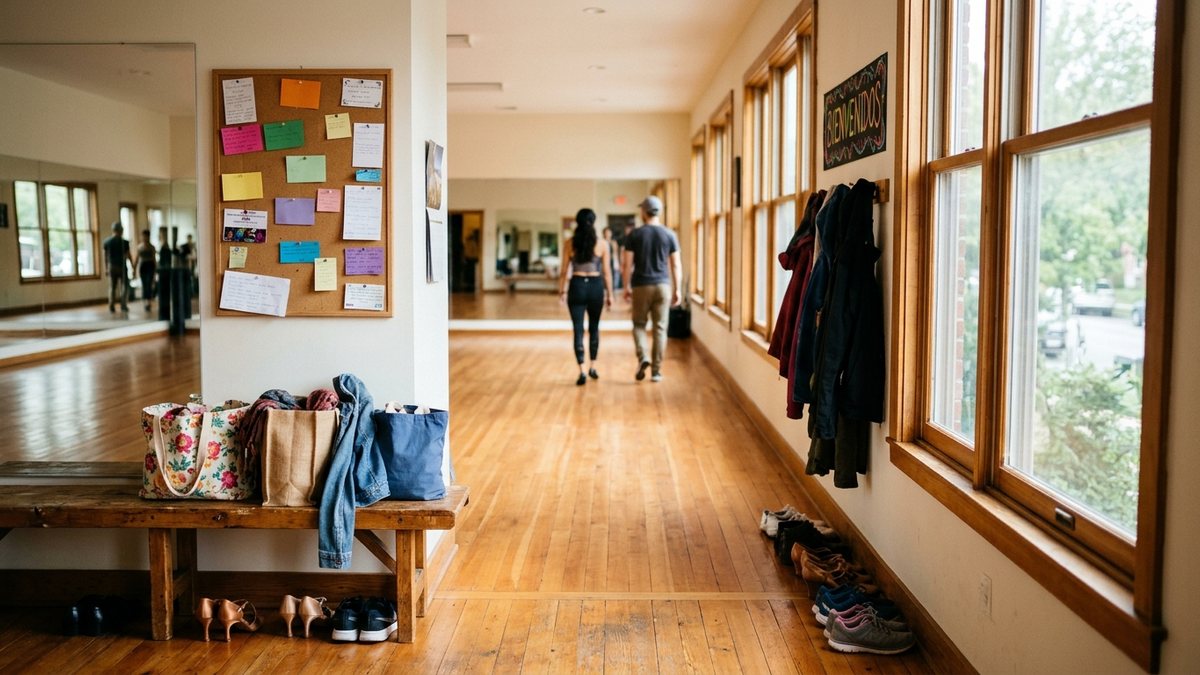
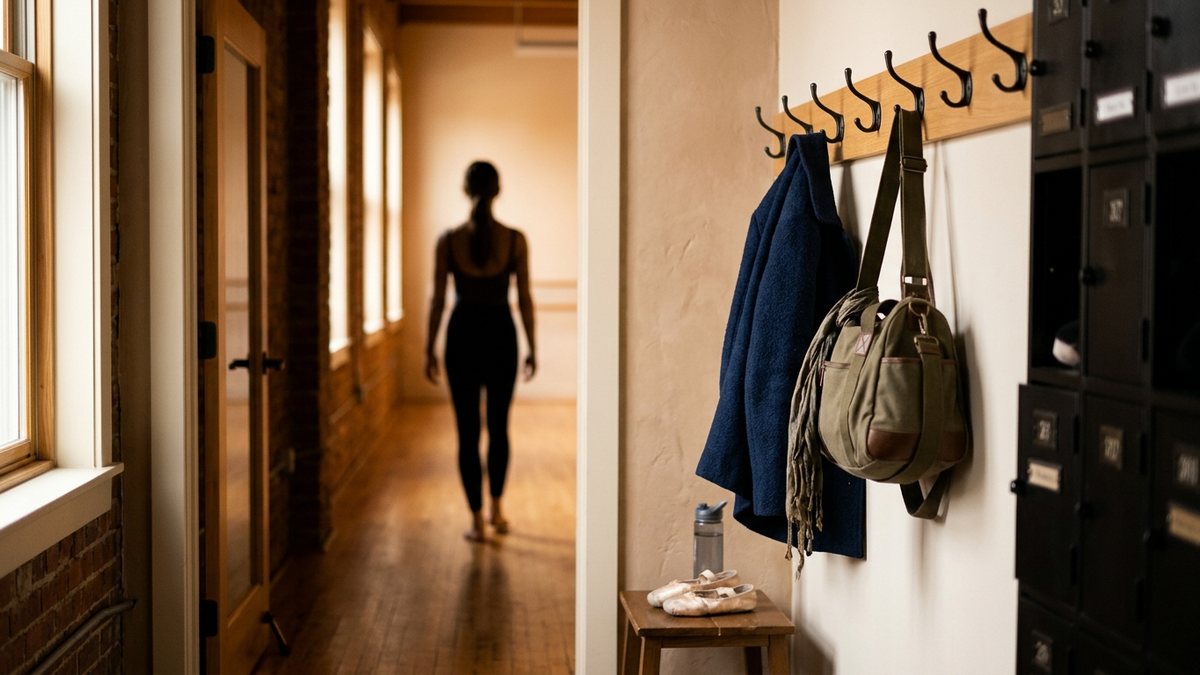
- Is there a place to put bags (a cloakroom, lockers, a bag area, the side of the wall and so on)?
- Is there a lock, is it paid, do you manage it yourself, or does the staff manage it?
- Where should you put your coat and large bags?
- Whom should you contact if you notice you left something behind after the venue has closed or after you have gone home?
How you ask can be as simple as “Where should I put my bag?” or “What does everyone do with valuables?” (a suggestion, “for example”). It is natural that the answers differ from event to event.
A note for readers who are organizers: I think participants feel reassured if you write a line in the notice about where to put bags and whom to contact about lost items (my suggestion).
What Should You Do With Accessories and the Contents of Your Pockets When You Dance?
I could not confirm this point on official pages. The following is my suggestion. The whole picture of shoes and clothes is in the shoes and clothes article, so I keep it short here.
- Take off things that are likely to touch your partner. For example, rings, bracelets, long necklaces, large earrings, watches and name tags. They can hit your partner’s hand or back, or catch on clothes or hair
- Reduce what is in your pockets. If you dance with a phone or keys in a back pocket or trouser pocket, they can hit your partner, or you can drop them
- Keep the things you take off in one place. Small things are easy to lose. For example, you can put them in a zippered pocket or a small pouch, and put the pouch back in your bag
- Tell your partner beforehand about things you do not want to take off. A short phrase such as “I can’t take off my ring, so sorry if it touches you” is enough
What Should You Do If You Lose or Leave Something Behind?
This is what I confirmed on the National Police Agency’s “Lost Property Report Information Site” (遺失届情報サイト) and on Hokkaido Prefectural Police pages.
What are the steps?
The National Police Agency page (for when you lose something at a shop or other facility) describes this flow.
- Ask the facility. If you lost it inside a facility, first ask the facility. If you think you lost it at a particular facility such as a station or a department store, also check with the manager of that facility whether it has been turned in
- If it is not found at the facility, ask the police.
- File a lost property report (遺失届, ishitsu-todoke) at a police station or police box.
This site cannot judge whether a dance venue counts as a “facility” here. But if you can contact the venue or the organizer, the order of asking them first seems usable as it is (my suggestion).
What do you write in a lost property report? Will they search for it?
The National Police Agency page “Points of the Lost Property Report” says the following.
- What you write is the date, time and place where you lost (or left behind) the item, name marking or individual numbers, and features such as color and shape
- A lost property report accepts the report of the person who lost the item. It does not prove the fact of the loss
- If an item written in the report is found, you will be contacted, but no investigation or search is carried out based on the report
- Items lost at home, at a company or overseas are not covered
- The storage period for found items handed to the police is 3 months, and if the owner is not identified in that time, the owner can no longer have the item returned. If you notice you have lost something, file the report early
In other words, filing the report means “you will be contacted when it turns up.” It does not mean the police go out to look for it.
Where do you report in Hokkaido?
According to the National Police Agency page, in Hokkaido both lost property reports and searches for lost items connect to a common “Police Portal for Citizens” (警察国民向けポータル, an online window). However, filing online may take time before the report is accepted, and if you are in a hurry, the page advises you to report directly at the nearest police station or police box.
The Hokkaido Prefectural Police page “Guide to Procedures for Lost Property” (落とし物(遺失物)に関する手続き案内) directs you to file reports and search from the National Police Agency page above. The Hokkaido Police Headquarters phone number 011-251-0110 appears at the top of the page (for phones in Japan; it may not be usable from abroad. It is the headquarters’ phone number, not a number marked as exclusively for lost items).
The “Window Guide” page of the Sapporo Chuo Police Station of the Sapporo Area (札幌方面中央警察署) says the reception hours for lost property at the police station are 8:45 to 17:30 on weekdays. It does not handle lost property on Saturdays, Sundays and holidays, or from December 29 to January 3. The phone number on the same page is 011-242-0110 (for phones in Japan). I have not checked the reception hours of other police stations. Please check the guide for your nearest station before you go.
What happens after the item is found?
The National Police Agency page says the following.
- In principle, the police station where the item was turned in will contact you in writing
- You pick the item up at the police station where it was turned in
- If an agent picks it up, a power of attorney and a document that can confirm identity are needed
- If the person who found it asks, you need to pay a reward of 5 to 20% of the value of the item (2.5 to 10% if it was found inside a facility), plus the costs of storage and so on. The page says the amount and the way of payment are decided by talking with the finder
What if you left something on the subway or streetcar?
The Sapporo City Transportation Bureau page “If You Left Something Behind” (updated October 1, 2026) says the following. For items left that same day, the contact point differs between the streetcar, subway cars, station premises and buses.
- For items not left that same day: the Lost Property Center (忘れものセンター). Phone 011-241-2938 (for phones in Japan), every day (open all year) 9:00 to 20:00 (9:00 to 19:00 from December 30 to January 2). It is on the first basement floor of the Toho Line concourse at Odori Station. The page says the hours changed on April 1, 2026
- Chat: you can search for items left on the subway and streetcar through a chat called “findchat.” From April 1, 2026, it can be used by email address as well as LINE
- What you need to pick up an item: identification such as a driver’s license or My Number card. If an agent picks it up, a power of attorney and the agent’s identification (it says that a power of attorney may not be needed for a family member living in the same household whose address can be confirmed to be the same)
- Beware of fraud: the page writes that there is a method in which someone calls pretending to be a “Lost Property Center” (遺失物センター) or “Lost Items Center” (落とし物センター) and has you press numbers. The Lost Property Center does not guide people with an automated voice. For suspicious calls, the page advises you not to respond on the spot and to consult the police consultation line, #9110 (for phones in Japan; it may not be usable from abroad)
This page did not give the storage period or how cash and mobile phones are handled.
What if you find someone else’s lost item?
Article 4 of the Lost Property Act (遺失物法), which I checked on e-Gov Law Search (e-Gov法令検索), says that a person who finds an item must promptly return it to the owner or submit it to the chief of a police station (paragraph 1), and that a person who finds an item in a facility must promptly hand it over to the facility occupier (paragraph 2) (I have left out the provisos and other details).
The National Police Agency page says that if you do not submit it to a police station or similar within 7 days of the day you found it (within 24 hours if you found it in a place that has a manager), you lose the right to claim a reward and other money. When you find something at a venue, the realistic first step is to hand it to the organizer or the venue staff (my suggestion). This article cannot judge individual cases.
If You Lose Your Cards or Your Phone Payments, Whom Should You Contact?
The National Police Agency page (the sections on losing items on the street and in facilities) says the following.
- If you lose a cash card, credit card, mobile phone or the like, contact the issuer or the mobile phone company to stop the use and take other steps, to prevent misuse
The Financial Services Agency and National Police Agency cash card page (an old material, as written above) says that if you notice a loss, you should report it to your bank immediately, and if you notice a theft, you should report it to your bank and also to the nearest police station.
The Consumer Affairs Agency (消費者庁) page “Safe and Secure Use of the Internet” (a notice about unauthorized use of credit cards; the date of posting is not shown) says to check your statements carefully and to contact the card company at once if there is a charge you do not recognize. It is not a page that explains the procedure when you lose a card. A February 2020 (Reiwa 2) PDF from the same Consumer Affairs Agency and the Ministry of Economy, Trade and Industry (a notice about unauthorized use of credit card numbers) lists the “Consumer Hotline” (消費者ホットライン) 188 as a consultation contact (a 3-digit number with no area code; for phones in Japan), and says it guides you to the nearest consumer affairs center or similar.
There are also things I could not confirm. The pages I opened did not give contact points or compensation conditions for each provider for losing QR code payments or electronic money on a smartphone. They should differ by provider, so it gives peace of mind to check beforehand in the official guidance of the payment services you use and of your mobile phone company (my suggestion). The explanation page on losing credit cards by the National Consumer Affairs Center of Japan (国民生活センター) has been taken down, and I could not check its content.
FAQ
Is it OK to keep my bag on me while I dance?
When you dance as a pair, the bag can hit your partner, so I think it is safer to take it off (my suggestion. I wrote the same in the shoes and clothes article). If the venue has a place for bags, please follow its guidance.
What should I do at a venue with no cloakroom or lockers?
Asking the organizer or staff whether there are rules about where to put bags is the sure way (my suggestion). Beyond that, you can carry less, keep your valuables together and put your bag where you can see it. If you feel it is hard to ask, look at the event notice page first.
I noticed I left something behind after I left the venue.
Following the order in the National Police Agency’s “When you lose something at a facility,” first contact and ask the venue or the organizer (my suggestion). If it is not found, file a lost property report at a police station or police box. If cards or a mobile phone are included, contact the issuer or the mobile phone company right away and take steps such as stopping their use.
If I file a lost property report, will the police look for it?
The National Police Agency’s “Points of the Lost Property Report” page says that no investigation or search is carried out based on the report, and that you are contacted when the reported item is found.
I don’t know whether I dropped it or left it behind.
The National Police Agency has a page for when you lose something on the street or elsewhere and do not know where you lost it. It says to ask the police and then file a lost property report, and to contact the issuer or mobile phone company right away for cards and mobile phones. To explain the situation clearly, it is easier to talk if you keep a note of the date, time and place (my suggestion).
When my belongings go missing, do I have to suspect someone?
No. This article is not for suspecting anyone. I think the first step is to check together with a person at the venue whether the item was left behind, mixed up with someone else’s, or put somewhere you misremember (my suggestion). If it is still not found, go on to the procedures above.
I took someone else’s belongings home by mistake.
I think the basic idea is to contact the venue or the organizer as soon as you notice, and talk about how to return it (my suggestion). This article cannot judge the legal treatment.
Related articles
- What to Wear and Which Shoes for Latin Dance (Sapporo Winter Too)
- Getting Home After Dancing in Sapporo: How to Check Subway, JR, Taxi and Designated Driver Services at Night
- Getting to and from Latin Dance in Winter in Sapporo: Snowy Roads, Shoes, Warm Clothes and Getting Home After Drinking
- Your First Latin Dance Social: What to Expect from Arrival to Going Home
- Uncomfortable or in Trouble at a Dance Event? What You Can Do and Who to Contact in Japan
You can also look up event dates on the Sapporo Latin Dance Calendar (札幌ラテンダンスカレンダー) (external site).
Sources
I checked the following pages, among others, on November 8, 2026.
- National Police Agency (警察庁): Reporting and searching for lost items (Hokkaido connects to the Police Portal for Citizens) (Japanese)
- National Police Agency, Lost Property Report Information Site: If you lose something, file a lost property report right away (notes on cards and mobile phones, rewards and more) (Japanese)
- National Police Agency, Lost Property Report Information Site: What a lost property report is, and its points (Japanese)
- National Police Agency, Lost Property Report Information Site: When you lose something at a shop or other facility (station, hotel, entertainment facility, school and so on) (Japanese)
- National Police Agency, Lost Property Report Information Site: When you lose something on the street (outside a facility), or do not know where you lost it (Japanese)
- Hokkaido Prefectural Police (北海道警察): Guide to procedures for lost property (Japanese)
- Hokkaido Prefectural Police, Sapporo Chuo Police Station of the Sapporo Area: Window guide (Japanese)
- Hokkaido Prefectural Police: Notices on crime prevention (contacts, and the list of materials posted in June 2024) (Japanese)
- Hokkaido Prefectural Police: material on theft from parked vehicles, “If You Have Luggage, You Will Be Targeted!” (PDF) (Japanese)
- National Police Agency: notice about the 2026 (Reiwa 8) Kumamoto earthquake, “Crime Prevention Measures at the Time of an Earthquake” (PDF) (Japanese)
- Financial Services Agency and National Police Agency: Your Cash Card Is Being Targeted (an old material, posted in 2005 and updated in 2006) (Japanese)
- Consumer Affairs Agency (消費者庁): Safe and Secure Use of the Internet (unauthorized use of credit cards, 188) (Japanese)
- Consumer Affairs Agency and Ministry of Economy, Trade and Industry: Beware of leaks and unauthorized use of credit card numbers at internet shops (February 2020, PDF; checking statements and 188) (Japanese)
- Sapporo City Transportation Bureau (札幌市交通局): If you left something behind (Lost Property Center) (Japanese)
- e-Gov Law Search: Lost Property Act (Act No. 73 of 2006), Article 4 (Japanese; only Article 4 was checked)
There are also things I could not confirm. These are: a current page of the National Police Agency or the Hokkaido Prefectural Police that deals only with bag theft, a City of Sapporo page for lost property, official contact points for losing QR code payments or electronic money on a smartphone, and the National Consumer Affairs Center of Japan’s explanation of losing a credit card (taken down). Phone numbers and reception hours may change. Please check the latest notice on each page before you call. This article cannot give individual legal judgments. If you find a mistake, please let me know through Contact (Japanese).